

After two years of pandemic, rising living costs, looming targets for decarbonisation and many other pressing issues, how does a housing association keep all the plates spinning? Mark Lawrence speaks to Tony Stacey, Chief Executive at South Yorkshire Housing Association, about his organisation’s approach.
Based in the Sheffield city region with 6,000 homes, from the outside it would look as if South Yorkshire Housing Association is your typical mid-sized housing provider.
But the reality is far from it: it has a huge variety of impressive initiatives and a strong sense of purpose in all its endeavours.
Sitting down with the chief executive, the affable Tony Stacey, he instantly rejects a question on whether housing associations are doing too much, pointing at his own organisation as an example.
“We’re the largest provider of social prescribing services in the north of England. We’ve run a randomised control trial for the Department of Health called Working Win, we provide employment support for those with mental health issues, and we run a programme for older people called Age Better (many of whom aren’t SYHA tenants) to help with loneliness.
“I’m surrounded by brilliant people so why would I want to stop them from tackling loneliness, or tackling ill health, or anything else?”
And it’s that purpose, which has also been lauded by the Regulator of Social Housing, that drives everything Tony and SYHA do.
The past two years have been extremely challenging for many housing associations, but Tony believes the organisation’s cultural foundation set it up well to deal with the difficulties caused by the pandemic.
“We were definitely in unknown territory, but I think for us, because we’re so clear about our values and culture, there was a stake in the ground that proved even more so the strength of the organisation and community. That culture of being there to support each other and not to play the hero.”
“I’m surrounded by brilliant people so why would I want to stop them from tackling loneliness, or tackling ill health, or anything else?”
Building on this, Tony has long complained about the use of the word ‘vulnerable’ within the sector and some organisations acting as saviours.
He adds: “For many years now we’ve resisted indulging in that narrative. We don’t use the word vulnerable for our residents – everyone can be vulnerable at times in their lives. This sort of model of an organisation as a white knight to save the vulnerable tenant is very paternalistic.
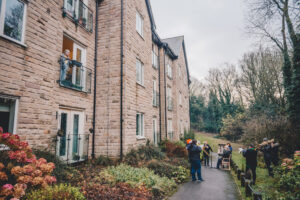 “During Covid, when everyone was scared and uncertain, our best way of responding was by being SYHA. It brought out aspects of our community and services that we didn’t know were there and that was very encouraging.”
One of the initiatives SYHA embarked on was peer-to-peer surveying of residents. It allowed the organisation to learn about its residents through residents, creating “a different type of quality conversation”.
From that, the organisation heard loud and clear that the overriding message was that people were feeling isolated and lonely.
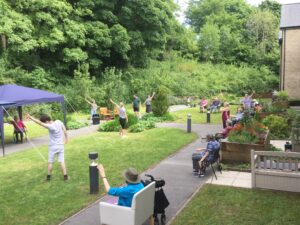
“In response, staff set up dances, quizzes, music, theatre, and tailored a lot of our services to solve this,” Tony summaries.
And with a large number of supported housing properties, this was perhaps even more important to get right.
SYHA was one of the many housing associations that were created in the aftermath of Ken Loach’s 1966 film, Cathy Come Home. Years later, it’s now a founding member of the Homes for Cathy group – a coalition of housing associations committed to ending homelessness.
“During Covid, when everyone was scared and uncertain, our best way of responding was by being SYHA. It brought out aspects of our community and services that we didn’t know were there and that was very encouraging”
And with Crisis’ former CEO, Jon Sparkes, on its board, SYHA is even more determined in its mission.
Arguably, it’s the most positive landscape homelessness has had for a while. After the success of Everyone In – which showed that if the political will was there to end homelessness, it could be done – subsequent figures have shown that homelessness is falling.
 Whether the rising cost of living, increasing rents and other cuts have an impact the other way is yet to be known. It’s something that Tony says he’s “cautious” about when asked if the numbers are positive.
He says: “What was very positive was Everyone In and that first weekend where local authorities, government, housing associations and voluntary organisations banded together to get decent accommodation.
“The reduction in homelessness as a result was extremely positive. I think that willingness to come up with solutions and learn from each other is really positive too.
“There are some negatives, though. A lot of social housing organisations have been applying affordability tests to new tenants and have decided that some low-income tenants don’t meet that threshold and therefore shouldn’t be housed.
“The affordability tests are excluding people and housing associations are, therefore, becoming part of the problem. If they can’t live in social housing, where can they live?
“People are still evicting people for self-interest reasons, such as rent arrears, and people are becoming homeless as a result.
“One of the calls from the Homes for Cathy group is not to evict people into homelessness. There’s still a lot to do in putting our house in order and making sure that we’re not part of the problem.”
“We must be honest and say that some housing associations have got too big. These super large and over spread associations should look to themselves and demerge”
The other big issue Tony sees hampering the progress to end homelessness is supported housing funding.
He says that the decision to “strip away funding over a number of years” has led to less associations being able to provide this vital accommodation, which can help many more people out of homelessness than Housing First.
If 2020 was the year the sector focused most on its pandemic response and homelessness, 2022 is turning into the year that asset management is the talk of the town.
From repairs issues and damp to decarbonisation and the retrofit challenge, there’s plenty to think about – and Tony believes the latter is the biggest challenge the sector faces.
But on the disrepair issues, which have been highlighted on social media by residents and given national airtime by ITV News, Tony says he’s “ashamed”.
He says: “Firstly, it drags down the reputation of all of us when these kinds of things happen.
“Secondly, it adds to the stigma that tenants are feeling. One of our most involved residents, Pam Hankinson, said that while it was a good thing that it shines a light on these issues, it stigmatises us even more.
“The picture that you’re painting for the public is that’s what social housing is like. That’s now the image that forms in minds when we’re looking at social housing.”
He says housing associations that have been featured need to relook at the type of organisation they want to be.

“I think there are fundamental questions about how some organisations have clearly allowed their mission to drift. You look at who’s on their boards and they’re full of usually white male bankers.
“Of course, that board doesn’t see the social mission as the main reason they are there. That whole growth and merger mission has meant that the customer can get forgotten about.
“We must be honest and say that some housing associations have got too big. These super large and overspread associations should look to themselves and demerge.
“That’s not to say that all very large organisations provide a poor service, but I think it’s much more difficult if you’re too spread and lose touch with your communities.”
And for many of these homes that aren’t up to scratch from a condition point of view, it’d be easy to link to those that are performing poorly around energy efficiency.
“The affordability tests are excluding people and housing associations are therefore becoming part of the problem. If they can’t live in social housing, where can they live?”
Without government help, the targets for decarbonisation are looking impossible for many housing associations and local authorities. Tony brands meeting them the “challenge of our time”, and has already found that under current plans it’s “impossible” for SYHA to meet the targets without going bust.
“Collectively, we don’t know the answer. The only thing we can do is be clear about the problem. I think Michael Gove has been a real success as the housing secretary and I think one of the ways in which he’s been successful is that he listens.
“He’s an intelligent man that listen and gets that pressure on organisations. The myth that the bigger you are the more you can cope with these things was shown up by the G15’s fire safety bill. It’s no easier for them than it is for the smaller or medium organisations. It’s all relative.”
So, what has SYHA done to try and get on with the job? Firstly, it commissioned an asset management study and then sought to collaborate with other housing associations in the area to share the issue.
But the big drive from the organisation has been around co-design. Tony tells a story about SYHA going to people’s homes and offering free solar panels, with many residents telling them they aren’t getting near their roof. It forced the organisation to rethink.
“It was a lesson for us in terms of ‘whose assets are they?’. They belong to the community; our tenants have much more of a stake in them than I do. Thinking through how we codesign solutions that work for tenants as well as working for us, is important.
“The other thing is that you don’t want to start doing things that are counterproductive and then have to do them all over again. If you go for broke with hydrogen and then that doesn’t prove to be the right answer… where are you left?”
Tony and his team at SYHA don’t pretend to have all the answers but what they do have is a clear sense of purpose and direction. What the organisation does is rooted in ensuring it benefits residents, the organisation itself, and has an impact on different housing and health systems.
He’s proud to lead his “amazing colleagues” and it’s easy to see why: a community-focused association with an open and inclusive culture. And, in the 50 years they’ve been an organisation, they’ve never once had a complaint upheld by the Housing Ombudsman.
Expect to see many positive case studies coming out of South Yorkshire Housing Association in the years to come.