
Analysis of the Regulator of Social Housing’s regulatory judgements shows a worrying trend of fire safety failures among organisations with C3 and C4 gradings. In his latest investigation, Keith Cooper delves into the issues uncovered by inspection and what organisations are doing to address them.
“Residents need to be reassured that an effective system is in place to maintain the safety of their homes.” So said Dame Judith Hackitt, in plain and simple terms, in her first report into the Grenfell Tower fire of June 2017, which killed 72 people.
Just over eight years on from this recommendation, first made six months after the fire, HQM has examined just how far social landlords have come in meeting this goal by analysing two years of checks on so-called ‘consumer’ compliance by the Regulator of Social Housing (RSH).
What’s this analysis uncovered?
We’ve found growing evidence that Dame Hackitt’s recommendation hasn’t been followed by a significant number of housing providers. This is despite it being echoed almost every year following the fire in multiple heavyweight reports, in parliament by the regulator, and by many others, before it was enshrined finally as a legal requirement in the Social Housing (Regulation) Act 2023. This paved the way for the new consumer regulatory regime which came into effect in April the following year.
As recently as February this year, the RSH reported another local authority’s “failure to meet [its] legal and regulatory requirements in relation to electrical and fire safety”. The City of London Corporation, which owns and manages 1,900 homes in central London, most of them located in other authorities, had more than 1,000 fire safety remedial actions which were overdue, including a number of high-risk ones uncompleted after more than a year.
The City of London isn’t alone. It’s just the latest in a growing number of councils and housing associations which have been found to simply not know whether their tenants are safe in their own homes. Since the RSH began checking on fire safety it’s found “large numbers” of outstanding fire safety works in some social landlords, it told HQM.
What the regulatory judgements show
To find out how wide these fire safety failures are spread we’ve examined the 48 regulatory judgements issued between July 2024 and February 2026. Over this period, the RSH has issued seven C4 judgements. Six of these flag fire safety shortfalls dating back to 2012. Overdue fire safety remedial actions were also found in just under half (19) of the 41 C3 judgments.
Octavia Housing was one of the first landlords to be checked under the new regulatory regime. In July 2024, it was found to have 1,200 medium or high-risk fire safety remedial actions that were overdue after a serious fire in one of its properties that January. Octavia Housing has since become a subsidiary of Abri, a large Hampshire-based association.
The same month Bristol City Council was found to have some 3,000 fire remedial actions outstanding, with the RSH having “low confidence in its data management relating to fire safety” and was unable to prove that most of the smoke alarms in its homes met regulatory requirements, according to its regulatory judgement. A report into the “root cause” of its failings the next year found Bristol had “not prioritised” efforts to comply with consumer regulations – which include fire safety checks – “until shortly before proactive consumer regulation was introduced” in April 2024.
“Some people are looking at C3s in the wrong way: they think it’s good enough. But other authorities have moved heaven and earth to get there. C3s can be an absolute triumph or varnish over complacency”
Alistair McIntosh, chief executive, HQN
Months later, in October, the London Borough of Newham was found to have more than 9,000 overdue fire safety remedial actions, most of them for more than a year and most classed as high risk, its regulatory report found. Reports probing its failures to date have pointed out problems relating to “low data maturity”, a “lack of ownership”, “high turnover of senior managers” and “key posts being left vacant for lengthy periods”. Its councillors had been presented with “inaccurate, missing and misleading data” and reports numbering “hundreds of pages”, creating a risk that “key details, facts and figures are overlooked”, among many other findings.
We’ve also found multiple instances where shortfalls on fire safety uncovered in inspections turn out to be even more concerning after further scrutiny.
Newham Council discovered a “substantial omission…of data on smoke and carbon monoxide alarms” and that “smoke alarms in non-gas properties weren’t inspected” in probes launched since its 2024 judgement. Bristol Council found that far more of its smoke alarms were non-compliant with regulations than the regulator found after introducing a “more robust assessment” according to its council papers this year.
The small West Sussex district authority Arun was found to have “nearly 1,000” fire risk assessment remedial actions overdue at its inspection in July 2025. A more in-depth assessment this January found a backlog of 1,717, including “life-critical actions related to fire doors, compartmentation, emergency lighting and signage”, in its housing blocks, a report commissioned by the 3,500-home council found.
The regulator’s view
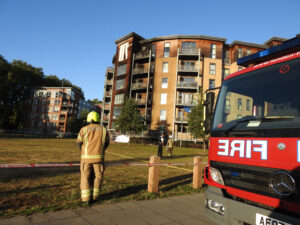
Angela Holden, director of regulatory engagement at the RSH, told HQM it was not unusual for “diagnostic works” following inspections to uncover more problems. “A local authority looks at its systems, processes and data. They ask themselves: what else do we need to know? Sometimes this can lead to things looking worse before they get better but that doesn’t happen in every case,” she adds. “But just because they discover something else during this period, we won’t always penalise them for that. The intention is to work with them and solve the substance of an issue.”
The regulator is more concerned when landlords don’t disclose these new findings of failure, Ms Holden indicates. “We have had a small number of landlords not tell us things because it’s bad news. When that does happen, we might see it in a data submission, or information being sent through the landlord’s governance structures. We want to work with landlords in an open and transparent way, and it would be better if we don’t have to pick these things up in council papers.”
Stern warnings
The RSH has also at times had to issue stern warnings to councils which it considers are taking too long to address fire safety shortalls.
Arun Council was warned in a letter from the RSH in December 2025, four months after being informed of its C4 judgement: “We’re not receiving evidence to demonstrate that Arun is making adequate progress to ensure remedial actions are addressed in a timely manner to ensure tenant safety.” “It’s concerning that the number of overdue remedial actions has increased and dates for completion have not been confirmed,” the letter adds. It’s plan for improvement had taken “several months to progress” as it was waiting for a council committee to sign it off. This wasn’t due to meet until January 2026, the letter adds.
Ms Holden says some local authorities have “struggled in the initial stages of getting their improvement plans going” and that governance requirements and infrequent council meetings could slow the approval of improvement plans. “But it shouldn’t stop landlords from getting on and resolving problems or developing an improvement plan to do so,” she told HQM. “For local authorities with poor-quality or limited data on the condition of their homes or health and safety checks, there’s very little stopping them from getting on and doing that work in advance of an improvement plan being agreed.”
The HQN view
HQN director Damian Roche, who advises several councils which failed to meet consumer standards on fire safety, has seen a “real diversity” of responses to the new regime. “Some organisations have been taking consumer regulation really seriously; others with C4s seem oblivious to the process and their role within it,” he adds. “I’ve had the impression that they didn’t have a clue about it until the Regulator of Social Housing arrived.”
Mr Roche puts this apparent malaise down to housing often playing “second, third or fourth fiddle” to more pressing priorities in councils, such as social care. “Social housing also affects a small proportion of some local authority’s populations,” he adds. “If you want to be cynical, it isn’t an election winner unless your ward is very heavily populated with local authority housing.”
“We’ve had a small number of landlords not tell us things because it’s bad news. When that does happen, we might see it in a data submission, or information being sent through the landlord’s governance structures. We want to work with landlords in an open and transparent way, and it would be better if we don’t have to pick these things up in council papers”
Angela Holden, director of regulatory engagement, Regulator of Social Housing
HQN chief executive Alistair McIntosh points to an enduring perception that fires with as many fatalities as Grenfell Tower are “extremely rare”. “People still talk about building safety rules being completely onerous and that they could use that money to keep people out of temporary accommodation. But it isn’t a question of either/or.”
Mr McIntosh says he’s even heard it said that a C3 judgement is the “going rate” for local authorities. “Some people are looking at C3s in the wrong way: they think it’s good enough. But other authorities have moved heaven and earth to get there. C3s can be an absolute triumph or varnish over complacency.”
Ms Holden says the RSH was aware that the perceived severity of a C3 or C4 grade might diminish the more it gave them out but hadn’t encountered “casual attitudes“ from councils or housing associations. “We think it’s important to call it as we see it and to be consistent in our grading approach across all landlords”, she adds. “We have had constructive engagement…and seen real desire to put things right.”
Putting things right
Two of the local authorities we examined in-depth say they now take their first safety failings seriously.
Arun Council says it had responded to “evolving national policy” following the Grenfell Tower fire. “While the council undertook a number of fire safety activities during this period, it’s clear from the regulator’s judgement that these actions weren’t sufficiently comprehensive, co-ordinated or consistently embedded to meet the required standards,” a spokesperson adds. “The council acknowledges that it fell short of the standards expected by residents and the Regulator of Social Housing.”
“Some organisations have been taking consumer regulation really seriously; others with C4s seem oblivious to the process and their role within it. I’ve had the impression that they didn’t have a clue about it until the Regulator of Social Housing arrived”
Damian Roche, director, HQN
The West Sussex authority had now established a “comprehensive housing improvement programme with a particular focus on resident safety and regulatory compliance”, she says. “Given the scale and complexity of issues, this programme will run over the medium term (up to 24 months), with resident safety actions prioritised and accelerated where possible.”
Bristol Council said it had in December hit the first milestone of the ‘housing consumer standards improvement strategy’ it published in May 2025, just under a year on from its regulatory judgement. This milestone “concentrated on getting the right policies, procedures and systems in place,” says Barry Parsons, chair of Bristol’s Homes and Housing Committee. “Our homes and housing service has a new senior management team in place and we’ve introduced a new housing management system and published a new resident engagement strategy for building safety. All of these provide the basis for making impactful and long-lasting changes.”
Newham Council didn’t respond to our request for comment. It was, however, quick to admit that its C4 judgement was a “damning indictment” of its housing services and promised “urgent improvements” whose progress can be tracked in council papers. And its new housing director started in December 2025 with a “simple priority”, according to his introduction on the council’s website: “To make sure your home is safe, in good condition, and a place where you can feel comfortable and proud to live.”
Coming more than eight years after Dame Hackitt’s similarly simple call for resident safety, tenants in Newham and elsewhere might be excused for a touch of scepticism, however well intentioned his pledge may be.