
The UK government plans to deliver 1.5 million homes during this parliament, enabled by its Planning and Infrastructure Bill. It argues the new legislation represents a “win-win” for housing and nature, but with the UK being one of the most nature-depleted countries in the world, wildlife organisations are wary of watered-down environmental protections. As Matt Pritchard suggests, the solution may lie in a deeper change in values and mindsets.
There’s a housing crisis and we really need to solve it. HQM readers don’t need to be persuaded of that. But there’s also an ecological crisis and we really need to solve that too. Global vertebrate populations have plummeted by 73% since 1970. Closer to home – and lest one think we’re avoiding such annihilation in our ‘green and pleasant land’ – we’re one of the most nature-depleted countries in the world. You needn’t even care about non-human life to see that this matters. Healthy ecosystems are the indispensable foundation of our society: according to UK government reports, nature losses drive human losses, from increased risks of flooding to food insecurity, disease and pollution. Wildlife decline also contributes to human physical and mental health decline, with nature poverty varying markedly between postcodes.
How, then, do we build 1.5 million new homes in five years without making matters worse? How do we solve two intersecting crises simultaneously?
One approach is to blame a cabal of sinister species which all happen to carry a whiff of witchcraft for blocking developments. It’s to imply that the slippery machinations of newts, snails, bats and spiders are thwarting young people from gaining a foothold on the property ladder. As Chairman of Natural England, Tony Juniper noted at the recent Wild Summit that ministers have been somewhat less vocal about the obstructive behaviours of popular, wholesome creatures like otters or golden eagles.
When one moves from Halloween rhetoric to policy, the harrowing tale continues. Existing environmental protection policies, and their implementation, are failing: the UK government is missing its own targets for nature recovery, and for providing clean water and air, remaining on track for just nine out of 43 environmental commitments.
The government claims that its new legislation is designed with exactly these failures in mind, but it isn’t learning from the mistakes. Take, for example, the policy of biodiversity net gain. This outlines how much habitat needs to be “restored” in exchange for developers destroying nature to build homes, but it turns out that the promised nature restorations rarely happen. Doubling down on this approach, the new planning system reforms enable developers to pool promised habitat “units” and restore them elsewhere.
But destroying nature in one place and trying to rebuild it elsewhere isn’t the answer: ecosystems take decades to mature (consider the complex interactions between soil, fungi, plants and insects), and people living in new homes surrounded by dead zones will pay the price of drastically reduced health benefits.
There’s a better way. I’m a senior research associate at the Nature-Centric Catalyst, a project based at the University of Reading and supported by the V. Kann Rasmussen Foundation. The catalyst explores the practical implications when other species aren’t just valued for what they can provide human beings, or objectified as lifeless “assets”, but have value in their own right. This ‘nature-centric’ stance expands the stakeholders considered in any decision to include other species, ecosystems and/or other natural phenomena.
Such a position may seem radical, but seeing nature as an intrinsic part of us, and vice-versa, is a more scientifically accurate worldview. Moreover, an international science body – the Intergovernmental Panel on Biodiversity and Ecosystem Services (IPBES) – produced a report ratified by 147 governments, including the UK, arguing that disconnection from – and domination over – nature was one of the key underlying causes of nature destruction. The IPBES concluded that “transformative change is urgent because there’s a closing window of opportunity to avoid further biodiversity loss,” stating the need for “fundamental system-wide shifts in views, structures and practices”. The UN and the European Environment Agency also deem this worldview shift essential for a sustainable civilisation – a shift with widespread implications for the design of our businesses, governance and education systems.
So, how would nature-centric housing work? And what would it look like? This summer, the Nature-Centric Catalyst hosted a workshop with academics specialising in the built environment, planning, ecology and law, with representatives from national and local government, and with architects, designers and consultants. Together we explored visions for nature-centric housing, probing the opportunities and risks for their realisation.
We identified a number of principles that would enable those visions. Perhaps the most important emerges when we question the assumption that humans should evict other species from their habitats in order to create our own. Instead, we ask what other beings already have their homes in the area being considered, and then seek to live alongside them as far as possible. In other words, instead of treating nature as something separate to us, like a property we have a right to destroy, we reassess our relationship with it.
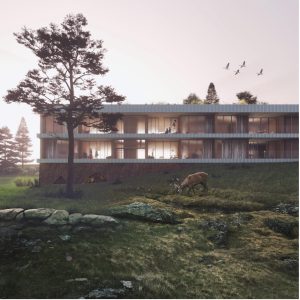
Environmental surveys show which species already live in a potential housing location, and together with ambitions for nature recovery, this can provide a basis for planning and design. Construction of modern housing will inevitably displace nonhuman species and disrupt nature cycles, but we should keep the degradation to an absolute minimum. Moreover, we should seek to restore habitats at the same location, thereby contributing to nature’s recovery and establishing coexistence.
This doesn’t mean we abandon nature recovery efforts elsewhere. Those should continue too, but the notion of biodiversity net gain (BNG) – in cases where this entails destruction of species, ecosystems or habitats in one area on the basis that this can be ‘offset’ by restoring something similar elsewhere – is problematic on several counts. First is that measuring the biodiversity in an area can be highly challenging, not just due to species identification but because many are mobile, invisible or seasonal. Advances are being made in sampling and measurement techniques, but there are deeper difficulties. One is that off-site restoration doesn’t recognise the uniqueness of individual places, which those who have experienced certain kinds of developments in a treasured area will know only too well: are you content for that unique forest you played in as a child to be levelled because there’ll be a plantation somewhere else?
There’s also the prospect that promised future benefits may not materialise. A recent study by the Royal Town Planning Institute found that only half (53%) of the ecological features required in planning permissions had been introduced, and when newly planted trees were excluded, this fell to 34%. This suggests major weaknesses in post-planning processes and enforcement such that, even if BNG and offsets are acceptable mechanisms, there can be little confidence that commitments will be honoured.
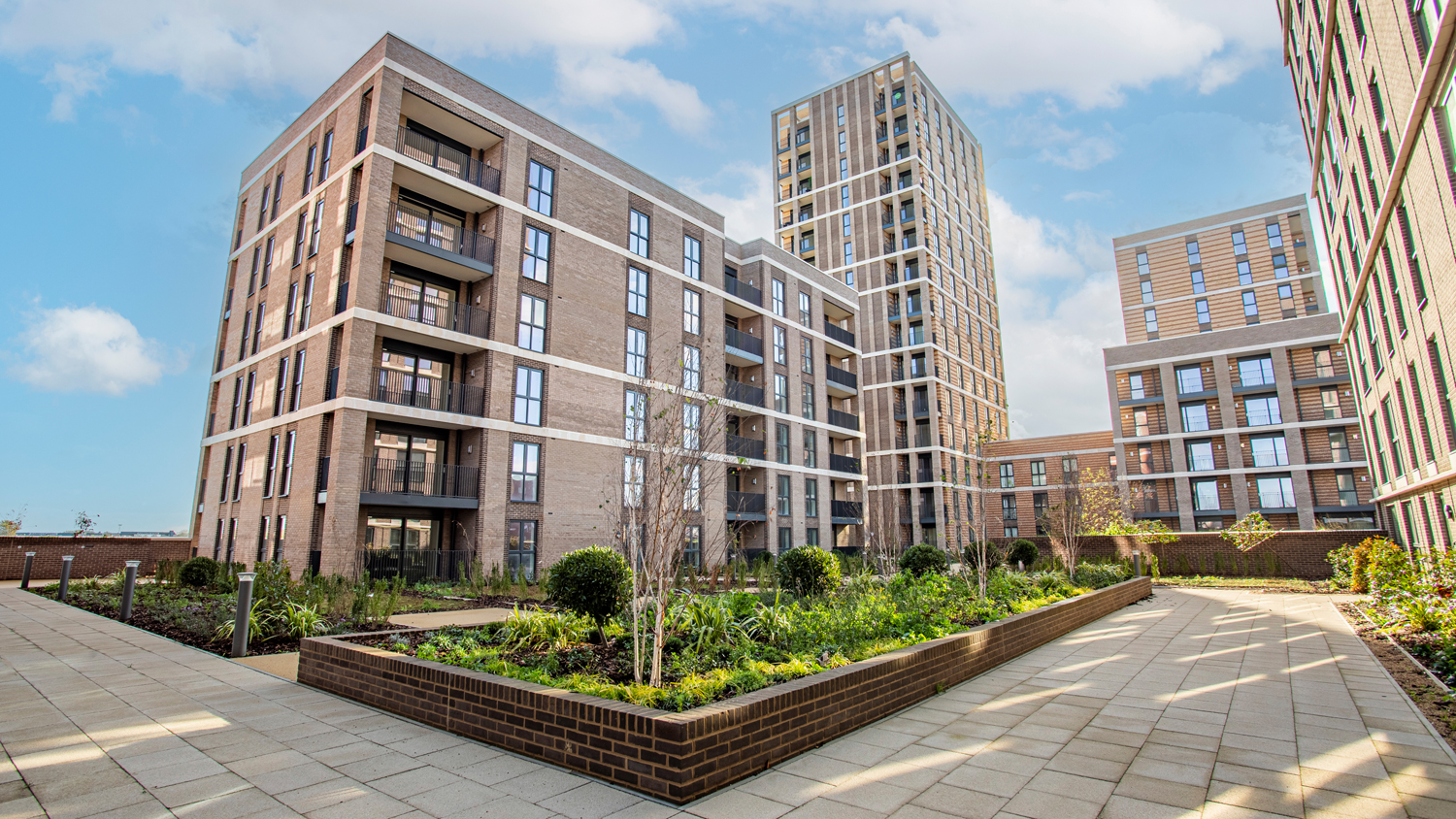
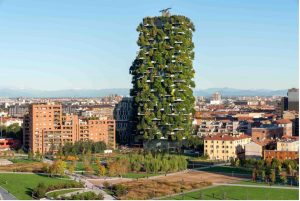
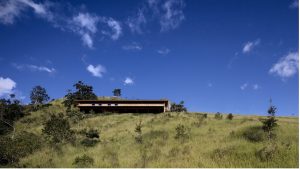
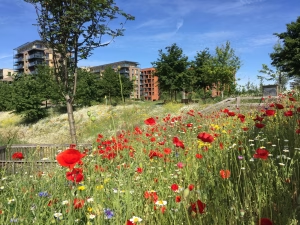
Nature-centric housing isn’t just a theoretical proposition or a hippie ideal; examples already exist, including in Brazil, Italy and the Netherlands. And in the UK, developments such as Kidbrooke Village in Greenwich demonstrate that it’s possible to create 5,000 new homes while providing habitats for declared spooky spoilers like newts and bats.
There may be challenges in building nature-centric developments at scale and adapting them to local ecosystems, but examples such as these show that housing design and surrounding areas can be tailored to help regionally rare animals, like otters and certain bats, as well as amphibians, insects and plants. The experts at our workshop agreed that the technical expertise already exists, but that we lack the deeper mindset shift needed to bring about such an ambitious programme.
Research shows that promoting this nature-centric shift in worldviews must become a top priority. Without such realigned value systems, environmental regulations are simply rules that get ignored. Hence, the poor state of our rivers and the loss of our plants and wildlife. But how would such realignment happen? At the core is how we grow our nature connectedness – our individual, subjective sense of our relationship with the natural world. In a planning context, this sense of connection can expand our imaginations for how we can live alongside other species, and develop political courage for the homes to match. Building them may take longer than a single parliamentary term, but anything less will continue to drive the loss of nature on which our health and prosperity depends.
As well as considering visions for nature-centric housing, our workshop participants assessed various interventions, some currently implemented, others in germinal phases, according to their potential to advance those visions or to reinforce the status quo. The interventions spanned financial mechanisms, regulation, governance approaches and local community initiatives, some related to housing, others to society more broadly. Some interventions, like the government’s proposed Nature Recovery Fund, are simply misaligned with nature-centrism for the reasons given above: a fund is welcome, but not as payment to avoid current site-specific nature protections. Others are more promising but liable to be diluted or ‘captured’ by the status quo. B-Corp certification, for example, has largely been a positive force, but its ‘triple bottom line’ of people-planet-profit perpetuates the conceptual separation between humans and nature. It also suffers where accredited organisations claim to strike a ‘balance’ across the three – assuming relationships of gain and loss between them – and therefore neglect opportunities to imagine paradigms and structures that might elevate all three together.
Finally, there are interventions that are well-aligned with nature-centric housing but which need help to scale. This is the case with forms of nature representation such as more-than-human assemblies, where each participant represents the interests of a particular species during a decision-making process. One type of assembly – the Interspecies Council – has been used for both exploratory future river policy development and to create a more-than-human response to the Defra Land Use Framework consultation. However, like many nature-centric interventions, it’ll need to be used more widely in order to have a strategic impact.
Ministers and developers might roll their eyes. They’ll say there’s already pressure to include climate mitigation and adaptation measures, such as solar panels, insulation and heat pumps. They’ll say that planting trees, creating provisions for individual species or incentivising interconnected gardens is just adding to an endless list that increases complexity and expense. They’ll say that nobody cares about snails or newts anyway, ignoring those who do and quietly omitting to mention the consequences of land use decisions for our charismatic mammals and raptors. And they’ll say nothing at all about the costs of ecological breakdown. However, a response focused on cost and complexity also carries the assumption that a housing location is for humans and nature provisions are add-ons. Nature-centric values and mindsets, by contrast, mean that the creation of individual dwellings and communities becomes a multispecies design process from the outset.
Nature-centric housing is the only real ‘win-win’ for housing and nature. It exposes the mirage of an alleged ‘win-win’ that extinguishes living populations in one location on the basis of a promise that provision will be made for some of their conspecifics elsewhere. The real solutions transcend bricks and mortar and rules about where to put them: we need to rebuild our care and responsibility to the natural world, acknowledging nature as something we humans are deeply part of, instead of apart from. To solve the housing crisis in ways that are genuinely sustainable may require “inner development”, but that development is highly rewarding in itself.
We can – if we choose to – unlock the housing crisis in a way that doesn’t compromise the integrity of nature on which national prosperity depends, creates a new generation of developments showcasing UK leadership and innovation, and provides people with ethical, healthy and desirable places in which to live.