How did an organisation designed to put residents at the heart of housing management become synonymous with one of the worst tower block fires in history? Keith Cooper examines the role of the Kensington and Chelsea TMO in the run up to the Grenfell disaster and highlights some lessons that are relevant to all social landlords.
Kensington and Chelsea Tenant Management Organisation was born in an era of tenant empowerment. The then government was keen on council tenants running their own landlord and altered laws to allow it. And after most of those living in the Royal Borough of Kensington and Chelsea voted in favour of the move, the first-ever council-wide TMO was created in 1995.
But almost two decades on, it’s now ignominiously known for its role in the Grenfell Tower Fire of 14 June 2017.
So, how did an organisation intended to put residents at the heart of housing management become linked to one of the worst housing fires in history?
‘Toxic’
The inquiry report concludes the fire to be the “culmination of decades of failure by central government and other bodies in positions of responsibility in the construction industry”. But it also exposes failings in the TMO’s “toxic” relationship with many residents, its handling of fire safety, and RBKC’s oversight.
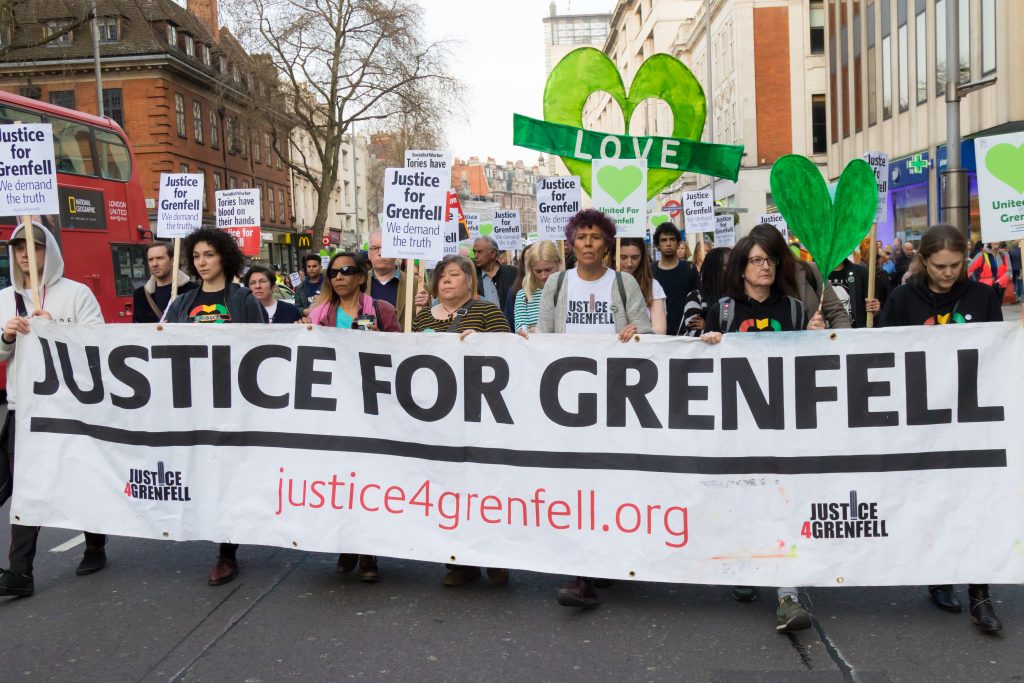
The report found that the TMO had developed a “persistent indifference to fire safety” and a “culture of concealment” about the fire safety problems it knew about as it ignored those of its own residents. Instead of being empowered, many felt “belittled and marginalised” and saw their landlord as an “uncaring and bullying overlord”. The relationship between the two was “characterised by distrust, dislike, personal antagonism, and anger,” the report says.
The report is also clear about where responsibility for maintaining that relationship lay. “[It] fell not on the members of that community…but on the TMO as a public body exercising control over the building which contained their homes,” the inquiry report concludes.
Housing Ombudsman Richard Blakeway says the report’s findings are of “huge significance”. “It is clear residents’ complaints were devalued and dismissed,” he adds. “The gross imbalance of power and dismissal of residents is striking…I see these themes repeatedly in our casework.”
Key lessons
The report makes no formal recommendations for social landlords; it expects that the Regulator of Social Housing’s “more active role” in policing standards in the professional and social housing and information sharing will address the concerns it raises. The detail of the report, however, contains several key lessons for housing providers and those who work in them.
“The TMO lost sight of the fact the residents were people who depended on it for a safe and decent home and the privacy and dignity that a home should provide”
The Grenfell Inquiry phase 2 report
As well as the perils of failing to respond to tenants’ concerns, it reveals how safety practices are flawed by professionals’ inexperience, poor training, and by burdensome workloads put upon people in “fundamental” positions of responsibility. It reinforces the role of strong oversight from scrutiny bodies, such as boards and council committees, but also that they’re only as good as the people who report to them. The report concluded that was a “satisfactory system” for senior managers to report to the TMO board and to RBKC but that they “didn’t operate effectively” because of an “entrenched reluctance” to report fire safety issues, linked to a “culture of concealment” that came from the top.
To show how these failings played out, the report goes into some detail on the TMO’s, history, the conduct of its officers and the role of RBKC.
Early years
According to the report, the TMO’s first few years appeared to go to plan. In 1996, a year after its incorporation, it elected a 15-strong board with a majority of eight residents, four council appointees, and three appointees picked by the board itself. Eight years on, in 2002, it became an arm’s length management organisation, a new kind of public body which allowed it to borrow money to do up its homes once awarded a two-star ‘good’ rating by the Audit Commission. This was duly acquired after an inspection the following year and boosted to ‘excellent’ after a further check on its services in 2006.
The relationship between RBKC, the TMO and their residents was set out in a “modular management agreement”. This gave the TMO the right to manage homes owned by the authority while RBKC retained legal, contractual and common law obligations to its tenants. The TMO was responsible for maintenance, repairs and proposing major works within budget constraints set by RBKC. The agreement also contained “detailed provisions about resident engagement in respect of refurbishment”, though most TMO officers “knew little or nothing” about them, the report says.
Cracks appear

The first official sign of cracks in KCTMO’s relationship with its residents appeared soon after its ‘excellent’ rating, in 2008, when RBKC asked Maria Memoli, a retired solicitor, to investigate residents’ “long-standing complaints” about major works, repairs, customer care and ethics, among others things. Her report, in April 2009, made “serious criticisms” of the TMO’s relationship with its tenants, leaseholders and freeholders. “Complaints hadn’t been resolved, it was felt, for some years,” Memoli’s report concluded.
A month later, in May, Robert Black, an apparently experienced housing professional, became the TMO’s chief executive. He recalled being “made aware” of the Memoli report and of “serious criticisms of the TMO’s governance and its relationship with tenants” but “couldn’t remember” having a copy of the report. “His impression had been that RBKC hadn’t been particularly impressed by it”, the inquiry report says.
The Butler report
That September, a further review of these long-standing complaints, known as the Butler report, made recommendations. These included: setting up a mediation or conciliation services; better sharing of information; and that RBKC should be “more robust in making sure the TMO’s technical services were capable of delivering an effective major works programme”.
The inquiry describes these recommendations as “striking”. “They could just as well have been contained in this report, given what we have found,” it adds. “It says much about the TMO’s character as an organisation that, despite these penetrating reports, eight years later it showed little sign of any change and appeared to have learnt nothing about how to treat, or relate, to its residents.”
From the outset of Black’s tenure in 2009, fire safety and the adequacy of the TMO’s fire safety measures were “regular subjects of discussion”, the inquiry report says. The London Fire Brigade was “troubled” because the TMO was producing its own “inadequate” fire risk assessments and had indicated it would serve an enforcement notice.
Fire safety failings
Black’s executive team included Barbara Matthews, the director of finance and ICT, whose responsibilities included putting in place arrangements to manage the risk of fire and to monitor the TMO’s health and safety performance. Before joining the TMO in 2015, Matthews had “no training in, or experience of, managing health and safety” and received “no training on the requirements of the Fire Safety Order or of the substance of that person’s duties”, the inquiry report says.
Matthews and the wider executive “relied heavily” on its health and safety manager, Janice Wray. Wray is described as playing a “fundamental role in the TMO’s performance of its health and safety obligations” but had responsibilities “probably too much for one person to discharge properly without substantial assistance and effective oversight and unfortunately she had neither”.
“It’s clear residents’ complaints were devalued and dismissed. The gross imbalance of power and dismissal of residents is striking…I see these themes repeatedly in our casework”
Richard Blakeway, Housing Ombudsman
In response to the LFB’s concerns that the TMO was carrying out its own fire risk assessments, the TMO commissioned Salvus Consulting to carry some out on its high-rise blocks. Its first batch of assessments that year, pinpointed several risks and its Fire Safety Management Report pinpointed 19 breaches of the Fire Safety Order, laws governing fire safety in England and Wales.
But a report prepared by Wray for the TMO’s board in December 2009 “gave the board no information about the serious defects that Savlus had found in the TMO’s management of fire safety across its estate”. There was also “no evidence that Black presented the report to the board”.
Black then helped prepare a report for RBKC’s Housing, Environmental Health and Adult Social Care Scrutiny Committee. This flagged “increasingly stringent requirements of the LFB” and a “new approach to fire risk assessments” but not that the LFB had considered issuing an enforcement notice. Such an omission became “part of an emerging pattern of withholding from those to whom he reported the fact that there were serious problems with the management of fire safety within the TMO”, the inquiry report says.
The 2010 Grenfell fire
The next year, in April 2010, a fire broke out in the lift lobby of floor 6 of Grenfell Tower. Days later, Wray informed the LFB and Black that smoke had leaked through an extraction system into the lobbies of eight floors, 7, 12, 13, 15, 17, 18, 19, and 20, and that residents had called the fire brigade for fear they were trapped in their homes.
But a report of the incident to the TMO board that June didn’t mention the smoke leakage, residents’ concerns or their calls to fire brigade. “The report gave the impression that the smoke ventilation system has operated substantially as intended,” the inquiry report says. “It grossly understated the extent to which smoke had spread within the tower and was seriously misleading.”
Four years later, in March 2014, the LFB issued the TMO with a deficiency notice “because of its failure to maintain the smoke ventilation system at Grenfell Tower”. But a report to its board two months’ later by Black “made no mention of the deficiency notice”.
‘Culture of concealment’
A year later on 22 October, Wray received another deficiency notice from the LFB for failure to remedy issues identified in a fire risk assessment in another block, Adair Tower. Wray brought the notice to Black’s attention on 31 October, the night a fire broke out in the block. Black agreed this was a “serious failing on her part” but the inquiry found it “consistent with a culture of concealment that started at the top and filtered down to lower layers of management”.
This deficiency notice for Adair Tower wasn’t mentioned by Black at a meeting of RBKC’s Housing and Property Scrutiny Committee a month later, an omission the inquiry report describes as “a serious dereliction of duty on his part but entirely consistent with the pattern of concealment he had established in relation to fire safety matters”.
‘Weak’ oversight
While the TMO’s board was supposed to oversee its executive, RBKC was supposed to provide a further layer of scrutiny of its performance on fire safety through a system of audits and performance indicators, and council committees. But this oversight was found to be “weak” by the inquiry. The council took “too little or no account” of the “highly critical” Salvus Consulting report of 2009 and none of its performance indicators were about fire safety. “The absence of any rigorous scrutiny by RBKC of the TMO’s performance of its health and safety obligations and in particular its management of fire safety was a particular weakness,” the inquiry report concludes.
As these concerns about fire safety were being concealed from the TMO’s board, Grenfell residents, frustrated by the way it handled complaints, began setting up representative groups.
Resident voices
Grenfell Tower Leaseholders’ Association was founded in 2010 by Shahid Ahmed to give leaseholders a voice about service charges. But it soon became a forum for raising concerns about fire safety. Ahmed told the inquiry he had “no faith” in the TMO’s complaints procedures. He had flagged concerns about the TMO’s attitude to fire safety “for several years” after the fire but felt it had “misrepresented the seriousness”.
The Grenfell Action Group was set up in 2010 by two residents, Edward Daffarn and Francis O’Connor, to give residents a voice about a new plan to refurbish the tower, which led it to being encased in the combustible cladding that played such a key role in the disaster, seven years later.
But while the action group was recognised as a tenants’ and residents’ association by RBKC in 2012, the TMO refused it the same status, arguing that residents were already represented by the Lancaster West Residents’ Association, named for the estate on which Grenfell was located.
This refusal continued despite the Tenant Participation Advisory Service advice that it “should seek to find a way to support the Grenfell Action Group and establish a harmonious relationship” with Lancaster West Residents’ Association.
The blog
So, in the summer of 2012, Daffarn and O’Connor began a blog to “communicate directly with the TMO” rather than using its “established processes”. Daffarn considered this “a necessary response to the TMO’s overbearing treatment of the tower’s residents”. The blog soon began raising concerns about fire safety, too.
In 2013, after a power surge in the tower damaged electrical equipment, the action group and the leaseholders’ association flagged residents’ concerns in an email and a blog. The blog claimed that the TMO had “played down the seriousness of the surges”. Daffarn told the inquiry residents felt RBKC’s housing and property scrutiny committee had also then “covered over” the matter and that as a result residents “lost trust in the TMO’s ability to take appropriate action in relation to fire safety”.
In January 2014, Daffarn asked the TMO for recognition and funds to support a Grenfell Tower residents’ group. The TMO again refused to recognise the proposed group.
Grenfell Community Unite
In March 2015, a group of Grenfell residents met and agreed to set up a group called Grenfell Community Unite. But when “forthright” reports on those meetings appeared on the action group blog, the TMO’s director of assets, Peter Maddison, responded by asking its legal team “at what point his comments would become libellous”. The next month, Black is quoted as saying that “TMO people preferred not to meet Grenfell Community Unite, since the meeting would provide a platform for Daffarn”.
It was only after the intervention of the then MP for Kensington Victoria Borwick in July 2015 that the TMO finally agreed to recognise a residents’ group, known from then on as the Grenfell Compact. It was formally constituted that September. But by that time there was only one more year of the refurbishment to run.
Petition
Later that year, some 60 residents petitioned the RBKC housing and property scrutiny committee, “asserting that residents’ views had been ignored or minimalised and that their day-to-day concerns had been belittled and brushed aside”.
The petition resulted in the KCTMO carrying out an “internal review” of the refurbishment but it did this without collecting residents’ views, despite it being a requirement under its modular management agreement. “Whether that was deliberate or not, ignoring residents’ views was entirely consistent with the TMO’s approach to engagement with it residents from at least February 2012 and…on the basis of Maria Memoli’s report, from far earlier than that,” the inquiry report says.
The inquiry called this review “superficial” and “flawed in its origins and its conclusions”. “Given the history of the matter and the lack of trust between the residents of Grenfell Tower and the TMO, the board should have realised that only an independent review of the management of the project with particular reference to the residents’ complaints could fairly satisfy the requirements of the moment,” it said.
But by this time the atmosphere between residents and the TMO had become “toxic”, the inquiry report concludes. “The TMO lost sight of the fact the residents were people who depended on it for a safe and decent home and the privacy and dignity that a home should provide,” it added. “For the TMO to have allowed the relationship to deteriorate to such an extent reflects a serious failure on its part to observe its basic responsibilities.”
Lessons from the Grenfell inquiry for landlords:
- Safety practices can be flawed by professionals’ inexperience, poor training, and by burdensome workloads put upon people in “fundamental” positions of responsibility
- Strong oversight from scrutiny bodies, such as boards and council committees, is essential but they are only as good as the people who report to them and the quality of information disseminated
- Satisfactory governance systems can only operate effectively if there’s an open and transparent relationship between managers, executive team and board. The TMO was found to have a “culture of concealment” at the top of the organisation and an “entrenched reluctance” to report fire safety issues
- The relationship between a landlord and its residents is at the heart of a well-run organisation. It should be nurtured through effective methods of engagement, open and honest conversations and continuous communication. The Grenfell TMO’s relationship with residents deteriorated over many years. Instead of being empowered, many residents felt “belittled and marginalised” and saw their landlord as an “uncaring and bullying overlord”. The relationship between the two was “characterised by distrust, dislike, personal antagonism and anger”.