
The provision of temporary accommodation is nothing new. But with more and more people turning to local authorities for somewhere to live, what was once used as a stopgap solution is becoming increasingly longer-term, with widespread consequences.
According to figures released by the District Councils’ Network towards the end of last year, district councils were expected to increase their spending on temporary accommodation by 33%. Meanwhile, figures published by the Ministry of Housing, Communities and Local Government around the same time showed that initial assessments for homelessness increased last year by 10.4% compared to the previous 12 months.
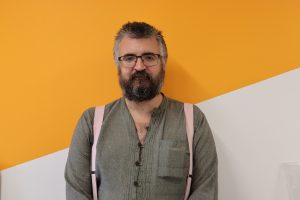
Tom Dixon, Head of Business Development at refugee integration services provider ACH, explains why temporary accommodation isn’t enough. He discusses the core building blocks to enabling refugees and migrants to unlock their true potential and shake off the stigma of living in deficit.
For many refugees and migrants, who are looking to rebuild their lives, particularly those who have recently arrived in the UK, the ripple effect of temporary accommodation is massive. Not being provided with a longer-term housing solution, that they can make their own and feels like ‘home’ again, has the potential to significantly hamper their ability to fully embrace and succeed within the local community.
Ability to integrate
Finding a home plays a fundamental role in enabling refugees and migrants to integrate. Many of the individuals we’ve worked with over the years have told us that finding a stable home is one of the most important factors in influencing their ability to integrate. In our experience, many of these individuals also require some level of underlying support for one or more needs, that have invariably led to them requiring temporary accommodation in the first place.
Unfortunately, while providing temporary housing may mean individuals have somewhere to live in the interim, those contributing additional needs aren’t often met. For many refugees and migrants, the all-important underlying needs – eg, poor mental health, debt problems and addictions – prevent them from moving forward and rebuilding their lives. And if individuals happen to have more than one need, which is often the case, the fight to overcome these barriers is even more challenging.
“…if individuals happen to have more than one need, which is often the case, the fight to overcome these barriers is even more challenging”
Sticking plaster
Providing refugees and migrants with temporary accommodation is nothing more than a sticking plaster. As the months and years go by, many individuals find themselves stuck in the same position, regardless of how much they desperately want to change their circumstances.
But by having access to the right fundamental support, refugees and migrants can buck this trend, successfully start again and go on to contribute as independent members of society. The core fundamentals include: safe, secure, quality housing; a sense of safety and wellbeing and opportunities to interact with society; and some form of employment (either employed or by creating self-employment opportunities). Securing employment is particularly crucial for helping individuals reconnect with and define their identity and sense of self-worth.
However, while there’s no one-size-fits-all solution for empowering refugees and migrants to lead self-sufficient and ambitious lives, there’s an extremely important component – supported accommodation – that’s instrumental in creating some remarkable outcomes.
Dedicated support
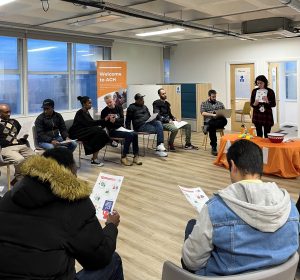
Contrary to popular belief, many supported accommodation solutions are designed to prioritise people’s dignity and enhance their quality of life. At the same time, individuals are provided with dedicated support to overcome their underlying needs, which often takes the form of dedicated support and housing officers who are assigned to each property.
The level of support that’s provided is tailored according to the person’s level of need. For example, if they require mental health or addiction support, then more intensive specialist support and regular intervention tends to be required. On the opposite end of the scale, some people may require lower level support that involves less frequent interaction with their support officer. Simply knowing there’s somebody there for them to turn to, and who believes in them, is extremely powerful.
In all circumstances, we work collaboratively with the individuals to develop a support plan that contains concrete milestones and realistic goals for them to achieve. The type of support – ie, training, business support and careers advice – they need in addition to being provided with a place that feels like home again varies from person to person.
Ultimately, the end goal should always be to help people live independently with access to the support they need to rebuild and thrive. Supported accommodation is undoubtedly the springboard to enabling them to do just that.
Case study: Hossein’s story
Four years ago, political unrest in Iran resulted in Hossein deciding to leave his home country in search of a safer life. His journey wasn’t easy – he travelled by foot most of the way. There were many tough days, with no food, sleeping in forests and feeling that he might never find stability. But finally, he made it.
When Hossein first arrived in the UK, he stayed in a temporary accommodation camp near Norwich for six months. Instability prevented him from moving on – he didn’t have a permanent house and because of this, he couldn’t get a job or achieve economic stability. In 2021, he was transferred to Birmingham. By this time, he had received his refugee clearance to live in the UK.
Hossein was provided with supported accommodation from ACH, which drastically changed his circumstances.
“Supported accommodation meant the ACH team was always there whenever I needed help,” he explains.
“They helped me sort out my driving license and immigration status. They also helped me find the best nearby college, where I enrolled and improved my English language skills. I could barely speak English when I first came to the UK. I really feel like they were always by my side.”
Not only does Hossein’s wife and daughter now live with him in Birmingham, but he has also set his sights on carving out a new career path for himself.
“I’ve more hope that things will be better in future. I used to work as a lab technician, but here, I’ve started learning carpentry,” he explains.
“I enjoy working with my hands, and carpentry feels like a good fit for me – it’s a skill that’s always needed. One day, I may return to lab work, but for now, I’m focused on building this new path.”