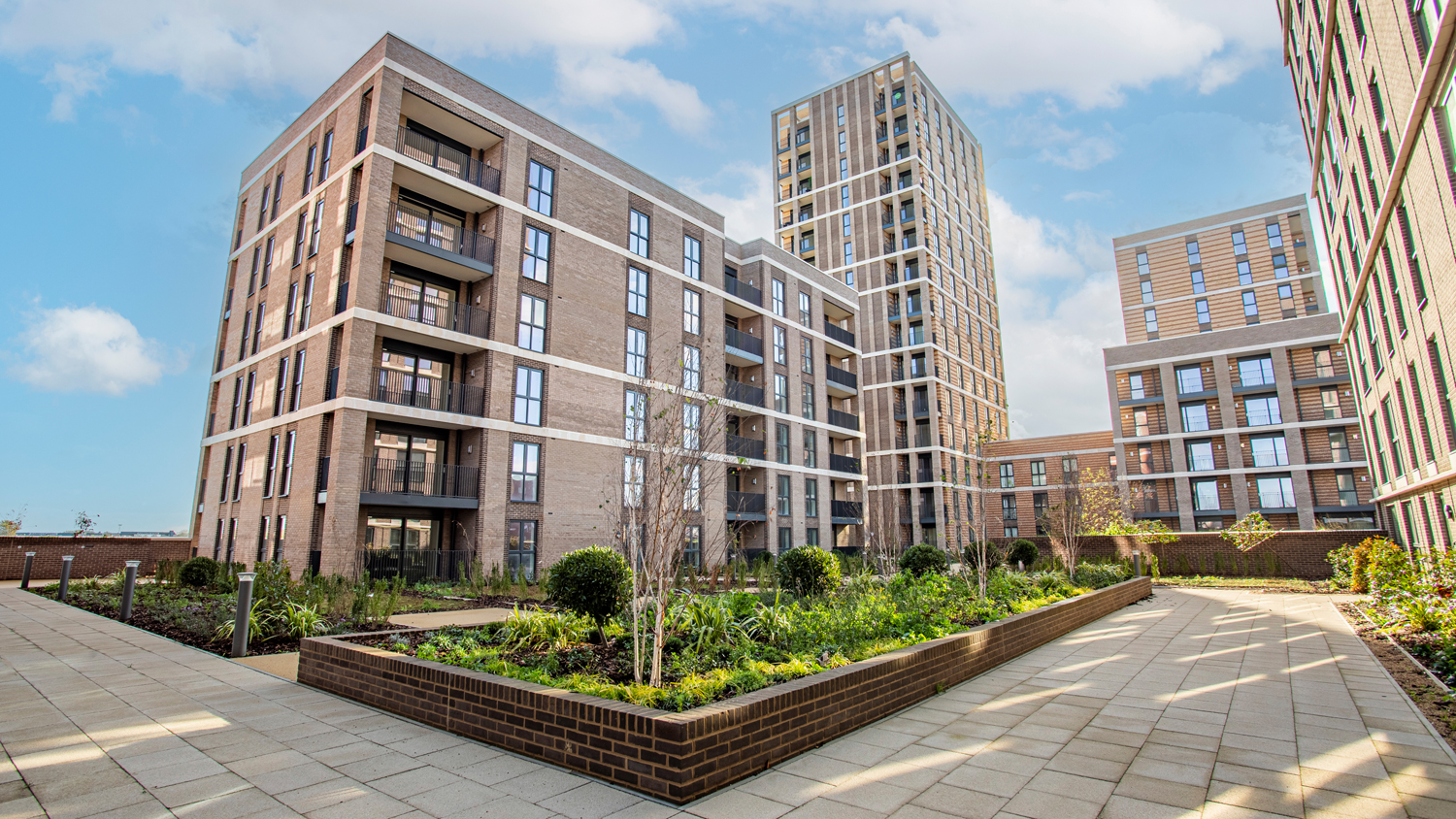

In the latest of our Housing in Practice series, Neil Merrick reports on how residents work alongside contractors to improve the gardens at a London estate.
The residents’ story
Five years ago, the gardens surrounding flats at the Factory Quarter estate in west London left much to be desired. Plants weren’t watered or properly cared for, and much of the earth looked dried out.
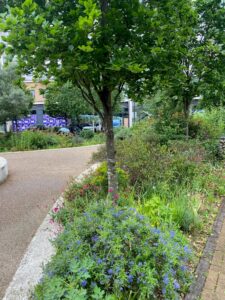
Five years on, the picture couldn’t be more different. Residents walk along shrub-lined pathways to get to their homes and can relax on the well-kept lawns. The new focus on outdoor lifestyles also means they get to know their neighbours better, so creating more of a community spirit.
“As part of its vision for such estates, the housing association is keen to work with residents and, where appropriate, offer them part-time employment”
Much of the transformation is down to residents John McNally and Steve Partridge, who began working alongside contractors Just Ask during Covid lockdowns in 2020. They’re now employed part-time, either by landlord Notting Hill Genesis (NHG) or by Just Ask.
Other residents joined in, keen to live in a greener, healthier environment. “People used to feel quite ashamed living here,” recalls McNally, a retired headteacher who bought a flat on the estate when it opened in 2009. “People comment on the change that’s taken place. We’ve turned a virtual desert into an oasis.”
Why is green space important?
Studies show how, during the pandemic, appreciation of parks and other green space rose significantly, particularly in urban areas. People who lived in flats were especially keen to have somewhere to relax and enjoy fresh air, a situation that remains much the same in 2024.
Green space not only helps improve air quality, but also people’s mental health. In addition, it helps to foster a sense of community among households who might otherwise rarely see one another or have an opportunity to chat.
How were the gardens on the Factory Quarter estate improved?
The Factory Quarter consists of 476 flats, 314 of which are owned by leaseholders. Of the remainder, 104 are for social rent, and 58 for intermediate rent. There are also 16 commercial units and a community centre.
In 2019, Genesis Housing Association agreed to spend £7,000 replacing top soil at the estate, prior to its merger with Notting Hill that created NHG. Residents then got together for community bulb planting sessions involving families and children.
With the gardens looking better, a masterplan emerged to improve the estate as a whole. A further £3,000 was raised through crowdfunding.
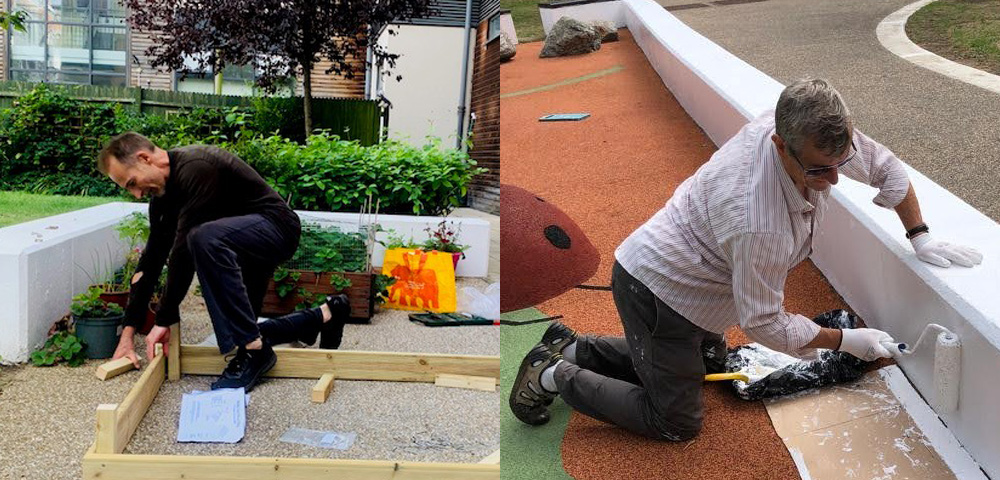
Meanwhile, Partridge, who has a background in the fitness industry, took the lead in painting equipment in the children’s playground and rendering a wall. A herb garden was also created.
At times, Partridge and McNally were up at 6am to carry out tasks and returned to the gardens two or three times per day. Some bulbs were donated free of charge by Westminster Council, where Partridge works as a swimming coach.
Where possible, pollinator-friendly plants are used around the estate to attract bees and other insects and increase biodiversity in the gardens.
In 2022, NHG set up a placemaking team to improve cohesion at the cross-tenure estate, including tackling antisocial behaviour. Led by an estate operations manager, the team comes under NHG Places, a new arm of NHG that specialises in creating and enhancing sustainable communities on larger estates.
Operations managers are responsible for everything within an estate’s boundaries, up to residents’ front doors. This includes service charges, plus arranging communal repairs or improvements, and estate inspections.
At present, estate operations managers are in charge of 21 estates, covering about 10,000 NHG residents. They also work with local authorities and other stakeholders.
At the Factory Quarter, the creation of the placemaking team and improvements to the gardens meant that community events became more commonplace, including celebrations of festivals such as Eid.
“It’s brought the community together, including the Somali tenants,” says Partridge, a leaseholder who bought his flat 14 years ago. “People really appreciate having smart gardens near to their homes.”
Was most of the work done by residents on a voluntary basis?
Up until last year, yes. However, Partridge is now paid to work ten hours per week alongside grounds maintenance staff from Just Ask, the estate services firm that’s also responsible for internal cleaning at the Factory Quarter.
McNally is employed directly by NHG for a similar number of hours, though his work (mainly replanting and deseeding) is likely to become more seasonal over the coming months.
“Green space not only helps improve air quality, but also people’s mental health. In addition, it helps to foster a sense of community among households who might otherwise rarely see one another or have an opportunity to chat”
Lesley Versprille, estate operations manager for the Factory Quarter, says Partridge and McNally brought a new passion to efforts to improve the estate, as well as its general upkeep.
As part of its vision for such estates, the housing association is keen to work with residents and, where appropriate, offer them part-time employment. “We’ve built a great relationship with them,” Versprille says. “They live here and have a great passion for gardening and for the community.”
Much of the work is straightforward, including weeding, litter picking, watering and planting. However, Partridge and McNally also possess skills that complement those of Just Ask employees, and the men work well as a team with the contractor’s staff.
What lessons can be learnt from the turnaround at the Factory Quarter?
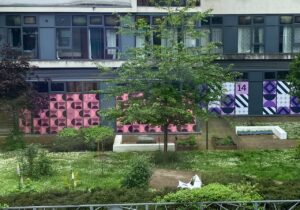
According to McNally, it was important that residents felt part of the overall effort to make the Factory Quarter a better place to live. “They’ve seen the results of their labour,” he says. “People are much more respectful of their environment.”
Leaseholders who might be considering selling or letting their flat are also grateful that the estate has taken on a smarter appearance, he adds.
Versprille says residents often see the bigger picture for their neighbourhood in a way that perhaps contractors don’t. “It means we can work more effectively as an estates team, bringing together the different parties,” she says.
The successful turnaround of communal areas at the Factory Quarter (allied to the arrival of the placemaking team) raises the question as to how much residents on other estates should be directly involved in gardening, grounds maintenance and other tasks.
And with new tenant satisfaction measures requiring social landlords to show they’re improving the quality of neighbourhoods, to what extent should tenants and leaseholders be expected to give their time and labour on a voluntary basis?
Mica Joseph, NHG’s head of estate management, says the benefits of residents playing a direct role are obvious. Contractors, meanwhile, are generally pleased to consider employing residents with the required skills. “Where possible and where resources allow, we should be looking at all different types of engagement with residents, paid and voluntary,” she adds.