
In the latest in our Housing in Practice series, Neil Merrick reports on a housing association that worked with residents at a home for people with learning disabilities to create a sensory garden.
The resident’s story
Prior to a few months ago, ‘John’ (name changed) rarely stepped outside his ground floor flat at Barnsbury Park in north London.
Not only did he prefer to walk around in bare feet (which is usually more comfortable indoors), but there was, in truth, little reason to leave the property.
Barnsbury Park provides independent living accommodation for men aged 30 to 60 with autism and other learning disabilities. Owned by the housing association Peabody and opened in 2010, it had a basic garden with a small area for playing basketball and a swing that was rarely used.
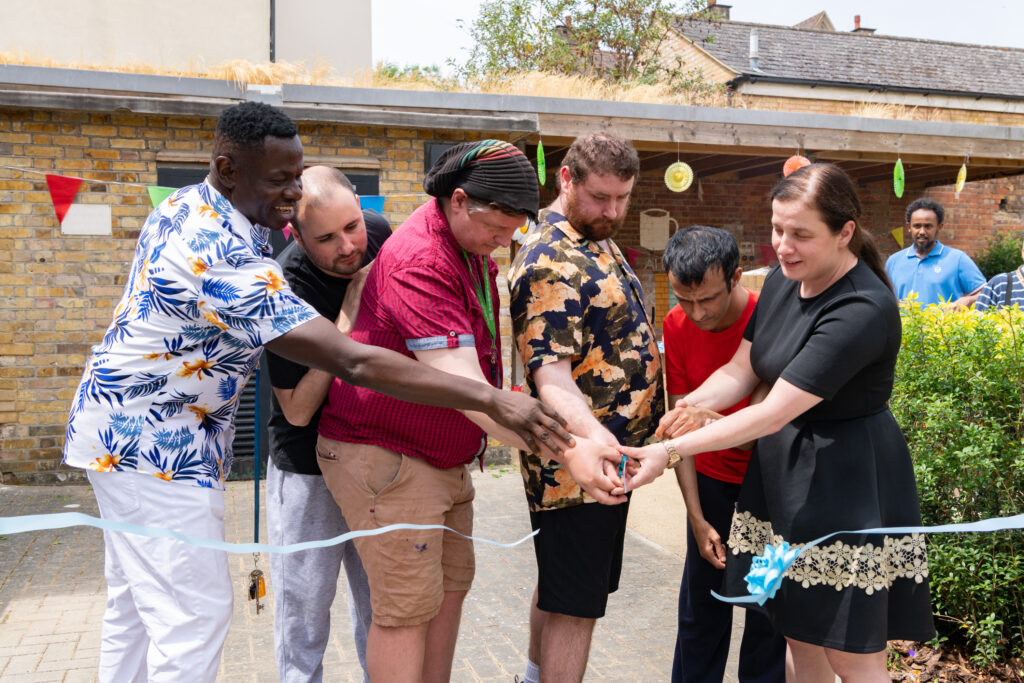
It was desperately in need of refurbishment. But since May, the garden has been transformed, and now boasts a football goal, xylophone, BBQ area, herb garden and other facilities.
John can now walk there from his flat on soft flooring that has been extended from the property into the new-look garden. Most days, he can be found playing the xylophone or chatting with flatmates.
“He has gone from living a secluded life to having more interaction with staff and other residents,” says Jeremy Sheppard, operations manager at Learning Disability Network London, which manages the home for Peabody and Islington Council.
Why are sensory gardens important for people with learning disabilities?
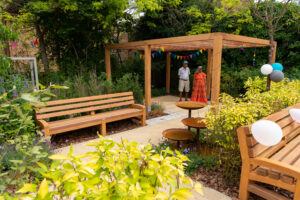
For people with autism and other learning disabilities, sensory gardens constitute far more than just an area to relax.
A range of landscaping, including trees and hedges, combines with areas for sport, music and other interests to provide a space that stimulates people’s senses and helps them deal with and overcome emotional issues.
According to the charity Thrive, sensory gardens aim to create a valuable distraction for people with a variety of sensory or therapeutic needs. They may help people to feel calmer, happier or just feel ‘more present in a moment’.
People with learning disabilities are often sensitive to excessive noise. A sensory garden there becomes a psychologically informed environment – an extension of the indoor areas where they otherwise spend much of their daily lives.
How were residents involved in creating the garden?
Barnsbury Park contains flats for nine residents. In August 2022, managers brought residents together with their families and a landscape gardener to discuss ways to upgrade the garden.
“We made the residents aware of what was available,” says Sheppard. “The experts came in and gave people a choice of what they could put in the garden.”
“It feels like an oasis in the city, I’m so impressed with the design; they’ve really thought about the complex needs of every resident”
Residents agreed to keep the basketball area and get rid of the swing, but then had the opportunity to choose what else should go in the garden. Once they had selected the xylophone, herb garden and other features, the designer produced a 3D plan to show how their garden might look.
Iain Shaw, Peabody’s director of specialist housing with care and support, says it was vital to give residents the opportunity to design the garden and select its main features. “We took a psychologically informed approach that involved residents and staff,” he says. “It has given the residents a space that they feel they own.”
How has the garden been received?
The garden is not just popular with residents, but their relatives. During the summer, families were welcomed to Barnsbury Park for BBQs, where they ate burgers and other food spiced with herbs grown in the garden.
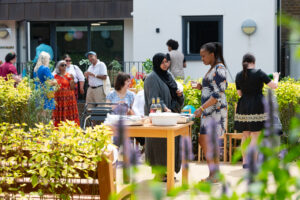
Niroo, a parent of one resident, is impressed by the number of flowers and trees, as well as the wildlife. “It feels like an oasis in the city,” she says. “I’m so impressed with the design; they’ve really thought about the complex needs of every resident.”
Another resident, who previously waited for staff to assist him inside and outside the home, now walks around the garden with limited support. “You can see the joy in his face,” adds Jeremy Sheppard.
Why is the project successful?
People with learning difficulties are not always given a choice over how their lives pan out. Not only is the garden at Barnsbury Park popular, but it demonstrates the value and importance of independent living.
“You’re not just encouraging independence, but jointly creating spaces that people own and that feel like home, which can make a huge difference to people’s lives”
Not only do residents spend more time outside, but they interact more, appreciating one another’s conversation, sharing interests such as sport, music or gardening, and watching one another learn new skills.
People with learning disabilities often have an aversion to uneven surfaces. Except for a few steps, most of the garden is even, offering reassurance to residents.
Staff are also delighted with how the project turned out. “The garden provides staff with another space to support residents and help them with their physical wellbeing,” says Sheppard. “It’s something that staff are extremely proud of.”
What does the scheme at Barnsbury Park demonstrate?
About 6,500 Peabody residents live in homes where they receive care and support. While the properties are maintained by the housing association, support services are paid for by local authorities.
Previously, says Iain Shaw, the design of the outdoor space at Barnsbury Park was deemed to meet the requirements of residents. But the world has moved on.
“With a focus on co-designing spaces with residents, as part of a psychologically informed approach, Peabody has created a safe and engaging space that enables residents to build their confidence and independence,” he adds.
Peabody will not reveal how much it spent on the sensory garden at Barnsbury Park for commercial reasons, but describes it as a long-term investment that will serve residents for 20 years.
It is also extending the inclusive approach taken at Barnsbury Park to other homes and properties for people with care and support needs, including three refuges. Here and elsewhere, residents work with staff to co-design communal lounges, gardens and other facilities.
“It’s about taking a psychologically informed approach and working with residents and staff to design spaces that work for them,” says Iain Shaw. “That way, you’re not just encouraging independence, but jointly creating spaces that people own and that feel like home, which can make a huge difference to people’s lives.”