
It’s dubbed a “miracle” in the press and deemed “highly effective” by homelessness organisations, but the popular Housing First approach is expensive and some experts question just how successful it is in supporting homeless people. Keith Cooper investigates.
 Housing First, an increasingly popular way of helping homeless people with high needs, has been lauded by policy experts and academics in recent years. Widely credited with slashing homelessness rates in Finland and the United States, where it was devised, it has been adopted and endorsed by authorities, charities and governments worldwide, including in the UK.
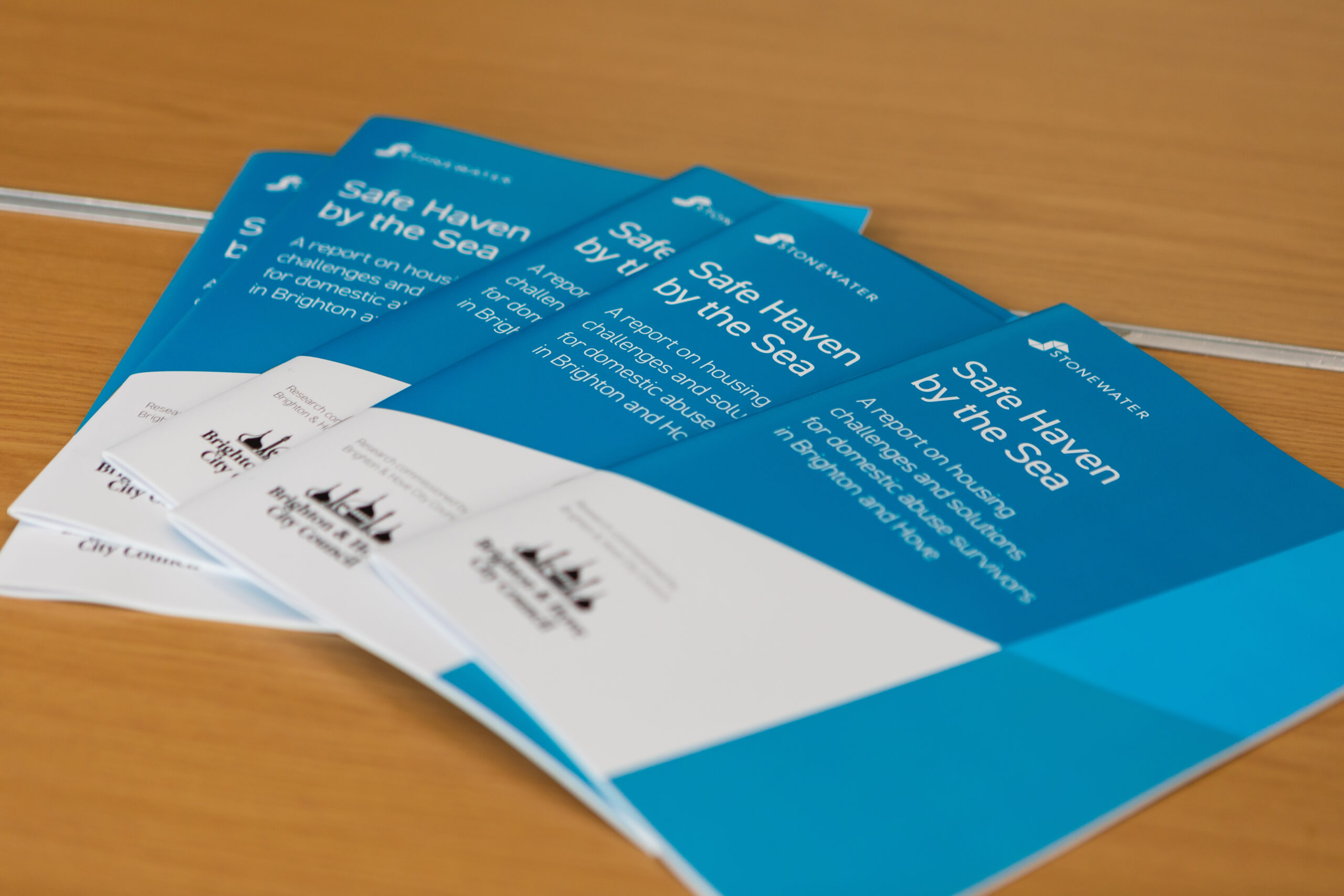
Services modelled on the approach have sprung up at a remarkable rate since 2010, with more than 100 up and running in England, according to charity Homeless Link. You’ll find them in most Scottish authorities, and in England a new model was recently tested at scale by government, with an initial £28m for a four-year pilot, launched in 2019 in the three big city sprawls in and around Manchester, Liverpool and Birmingham.
High-fidelity
At the heart of the ‘high-fidelity’ model, which was trialled in these city regions, is a commitment to stick strictly to a set of core principles (see box). On the practical side, these aimed to ensure quick and unconditional access to a home, regardless of whether you’re ready for it, and support for as long as you need it by staff with low workloads. This promise of rapid access to a home and unending support in a housing crisis at a time of constrained public finances made Housing First the “golden ticket” of homelessness, one housing source says.
Originally aimed at single people with multiple needs who are caught in a cycle of so-called ‘entrenched homelessness’, there have been calls for its rapid expansion to other groups. The Centre for Social Justice told the Conservative government in 2021 to put Housing First “at the heart” of its plan to end rough sleeping and “dramatically increase” the number of places. Greater Manchester’s Labour mayor Andy Burnham wants a “Housing First Unit” in the city by the end of this year. And the national party’s shadow deputy leader, Angela Rayner, wants a national rollout, according to one pre-election report on the website Politics Home.
But amid this apparent unbridled enthusiasm, there are calls for more sober assessment of how Housing First works in the UK. While its driving philosophy of rapid access to housing is widely welcomed, there are growing concerns about how much a wider rollout would cost and whether it would be worth it.
Silver bullet
Lígia Teixeira, chief executive of the Centre for Homelessness Impact, says the approach can be misunderstood as a silver bullet and is yet to be properly tested in the UK, despite multiple evaluations of the pilot programme.
“We do think that it’s an intervention that’s worth investing in but we need to be targeting it at the intended recipient. There’s definitely this misconception, in some quarters, that if only we invested more in Housing First that would solve all issues. That’s certainly not the case,” Dr Teixeira says.
“It targets a really small group of people, who are the most expensive ones in the system,” she adds. “Some very prominent people in the sector are also saying: ‘We know this works so we just need to do it here.’ But we know from other fields that things that work in other countries will flop in a different context. Resources are limited so it has to be tested in a rigorous manner.”
“A 2022 survey for the combined authority of support workers in Liverpool found that 70% of its 210 participants would need access to Housing First support ‘indefinitely’”
Signe Gosmann, network development and researcher at Justlife Foundation, which supports people in temporary accommodation, says Housing First can be very effective. “But there’s not one solution that fits everybody,” she adds. “There’s a concern that Housing First is talked about as if it’s the solution to homelessness, but it’s not. It’s one tool in the toolbox.”
Steve McKinlay, the chief executive of Tyne Housing, who advised the government on the pilots, is concerned that an unbridled expansion of the inflexible high-cost ‘high-fidelity’ model employed by the pilots would pull funding away from other much-needed services.
“Its ethos, as a housing rights-based approach, is fundamental in terms of taking progressive steps to reduce rough sleeping, homelessness and temporary accommodation,” he says in a comment piece for HQM. “But I’m genuinely worried that if all the money and attention is redirected into one, relatively expensive model, we’ll end up with more people sleeping rough,” McKinlay adds. “A national rollout of a Housing First model shouldn’t come at the expense of other parts of a homelessness safety net and a pragmatic homelessness prevention strategy.”
Concerns with the costs of the ‘high-fidelity’ model were flagged last year by Eddie Hughes, a rough sleeping minister during the time of the pilots, who worked at YMCA Birmingham before becoming an MP. “In principle, it’s completely the right thing to do. You turn up at a council with really complex medical and physical health needs. It takes a while to get you supported into a position where you’re able to support a tenancy on your own. Therefore, it’s difficult to put a time limit on that,” he told the publication Inside Housing in an interview. “However, that bumps into the reality of the fact that government funding is finite and sometimes time-limited. So, how do you manage to sustain that sort of support?”
Graduating
The pilots attempted to control support costs by introducing the idea of ‘graduating’ into the model. But this ultimately ended in failure, official reports indicate. Of the 1,200 people enrolled in the programme, only 32 had graduated towards the end of its final fourth year, most of them in the West Midlands. This pilot had assumed each participant would require three years of support and that a “significant number of clients would ‘step down’ from HF by the end of the pilot”, its own evaluation says.
Dr Teixeira says the idea of graduation was peculiar to the English model and “not very in line with the philosophy of Housing First. The idea of graduating came out of the need to work with the resources available but the whole point of Housing First is that it would be there for as long as those individuals need it because they’re such extreme cases.”
A 2022 survey for the combined authority of support workers in Liverpool found that 70% of its 210 participants would need access to Housing First support “indefinitely”.
“A national rollout of a Housing First model shouldn’t come at the expense of other parts of a homelessness safety net and a pragmatic homelessness prevention strategy”
Steve McKinlay, Chief Executive, Tyne Housing
Three pilots have also run into other difficulties, we’ve found. Councils running the services have struggled to stick to Housing First’s core principles and are again running out of cash. Together, the three pilots still support more than 1,200 participants and all appear to require central government funding to continue beyond March next year.
It’ll be no shock that the most problematic pitfalls of running Housing First in England is access to suitable housing and long-term funding.
Participants in the pilot programmes waited up to a year for a home, according to a government evaluation in 2022. Many waited for months. “The primary challenge faced by all three pilots continues to be access to affordable and suitable accommodation,” it adds.
Drained budgets
These prolonged waits drained budgets, put relationships with support staff under pressure, and even made participants worse. Many had to be placed in conventional supported housing until suitable homes became available. In Liverpool, this meant ‘double-funding’, rendering its Housing First programme “twice as expensive as the business-as-usual case”, according the city region’s own evaluation the same year. “If they’re in [supported housing] for a long time and then lonely or isolated, they’ll start…falling into negative cycles again, and sometimes people will worsen,” a government evaluation adds.
Funding became a bigger issue in the later years of the pilot, when it was close to running out.
Each city region was initially funded for four years, between 2018/19 and 2021/22, and was expected to offer ‘open-ended’ support. These fixed-term budgets almost inevitably became a source of anxiety for staff and participants as the March 2022 deadline loomed.
With just over a year and a half of funding left, none of the three city regional authorities had a “clear plan” about how to continue supporting the 904 participants they had at that point enrolled, an official report from 2021 says. The next year, this financial precarity turned anxiety into staff losses, and an even greater struggle to find suitable housing.
 “The lack of assurance regarding the continuation of funding has been extremely anxiety-provoking for service users and staff alike,” a government evaluation reported that year. “This has contributed directly to the loss of valuable frontline staff in Greater Manchester and the West Midlands; a similar situation was anticipated in [Liverpool],” it adds. “Staff described housing providers not being willing to offer properties due to the lack of confirmed funding.”
Any staff which remained were now worried about “abandoning” participants, as caseloads doubled. “We don’t want to traumatise people by promising the continuation of support and then disappearing,” one support worker said. “What demoralises me [is] the short-term nature of the thinking. You need long-term thinking, not two- to three-year pilots and an extra 12 months here and there. It just doesn’t work,” one provider says in the evaluation report.
Higher caseloads left support workers fire-fighting “crisis” instead of helping participants develop the skills they needed to maintain a tenancy. This “exacerbated stress levels among staff, some of whom reported feeling overwhelmed,” one official report says.
The government eventually agreed to fund two more years in September 2022 but this ran out in March. The Liverpool City Region Combined Authority and Manchester Combined Authority only have funding in place until next March but the situation in the West Midlands is less clear.
Neelam Sunder, senior programme manager for homelessness at the West Midlands Combined Authority, says: “Post-March 2024 there’s been no dedicated devolved combined authority funding for scaling up or continuing Housing First.” The seven local authorities which took part in the West Midlands pilot were advised by DLUHC to continue funding with their Rough Sleeping Initiative budgets, which also runs out in March, she adds.
Birmingham Council told HQM it had funding in place until next March but has almost halved the number of people on the programme and closed it to new applicants. In 2022, Birmingham’s Housing First pilot had 175 on its books, according to government reports. It now supports 69, a quarter of which are in temporary accommodation, the spokesperson says. “64 households have left the scheme as they now feel they can support themselves independently,” he adds. “Due to uncertainty in funding arrangements, there’s no capacity to take on new applicants at the moment.”
“Post-March 2024 there’s been no dedicated devolved combined authority funding for scaling up or continuing Housing First”
Neelam Sunder, Senior Programme Manager for Homelessness, West Midlands Combined Authority
Liverpool city region mayor Steve Rotherham is a big supporter of Housing First. “It’s a radical departure from this country’s traditional approach to helping the homeless,” he tells HQM. He claims the pilot has saved public services £34,500 per person on the programme and had proven “twice as cost effective” as more traditional methods of helping homeless households.
But a shortage of one-bedroom homes and the approach’s demand for “flexible support as long as it’s needed” were big challenges, a spokesperson for the Liverpool City Region Combined Authority says. “A lack of certainty over long-term funding makes it difficult to ensure that support is available indefinitely to our clients,” he adds. “The increasing pressures on local authority homelessness budgets mean that they’re not in a position to step in and fund the programme – therefore, central government funding will be needed.”
Greater Manchester Combined Authority says its participants still face long waits for housing and that the high support levels and low caseloads put an “effective ceiling” on how many it could help. “Expanding the service requires expanded revenue funding in order to maintain the intensity levels required for a Housing First service,” a spokeswoman adds. Four out of 10 of the 401 people enrolled in its service have so far sustained tenancies for two years.
In total, the government spent £42m on the pilot programme over six years to help more than 1,200 people. In 2022, the last year official figures are available, just over half had been found homes. Its most recent report in 2024 found “significant reductions” in the number of participants feeling lonely and unsafe, and a “significant positive shift” in their health and wellbeing, but “no statistically significant reduction” in drug use or alcohol dependency and “little evidence of people moving closer to the labour market”.
The future
So, what’s the future of Housing First? That lies in the hands of the new government, of course.
McKinlay says Labour’s commitment to economic credibility points to “little new investment into public spending. After 14 years of austerity, local authorities will still face a financial black hole. We need clarity over where new funding will come from and the trade-offs which it’ll require.”
Dr Teixeira says Labour must first look at how Housing First is funded, as the issue so skewed the performance of the pilots. “They should then pair that with a gold-standard evaluation, look at the cohort of people Housing First should be offered to, and make it part of a broader homelessness strategy, rather than just a rough sleeping one.”
A gold-standard comparison of Housing First, such as a randomised controlled trial, which compares it to other services which help a similar group, offers the best basis for rolling it out, Dr Teixeira adds. “There’s always a new fashion in homelessness, as elsewhere. But in health and education, any new model is tested scientifically before you roll it out or kill it.”
The seven principles of the Housing First ‘high-fidelity’ pilots.
- People have a right to a home.
- Flexible support for as long as it’s needed.
- Housing and support elements are separated.
- People have choice and control over the type and location of their housing.
- Active engagement – support staff are responsible for engaging with participant and caseloads are kept low.
- Service is based on participants’ own strengths, goals and aspirations.
- Harm-reduction approach – staff support those using substances to reduced immediate and ongoing harm.