
Danielle Aumord investigates the often confusing world of tenancy succession rights and meets social housing residents fighting to stay in their homes following the death of a family member.
Rio’s story
“My grandparents lived at Treadgold House for 53-years after coming to North Kensington from Grenada in the 1960s”.
As we sit in Fez Mangal, a popular Turkish restaurant in Ladbroke Grove, west London, Rio Roberts, 34, tells her story. She’s one of a group of people that have agreed to talk to HQM about the issues they are facing around social housing tenancy succession.
Rio was hit with a possession order for her home following the death of her grandmother in 2023. “After my grandfather passed in 2020, myself and my grandmother downsized from a three-bedroom flat to a two-bed,” she says. “I was offered a separate flat, but my gran couldn’t live by herself. I was her carer, so I signed an agreement to live with her as an occupant, not as a tenant.”
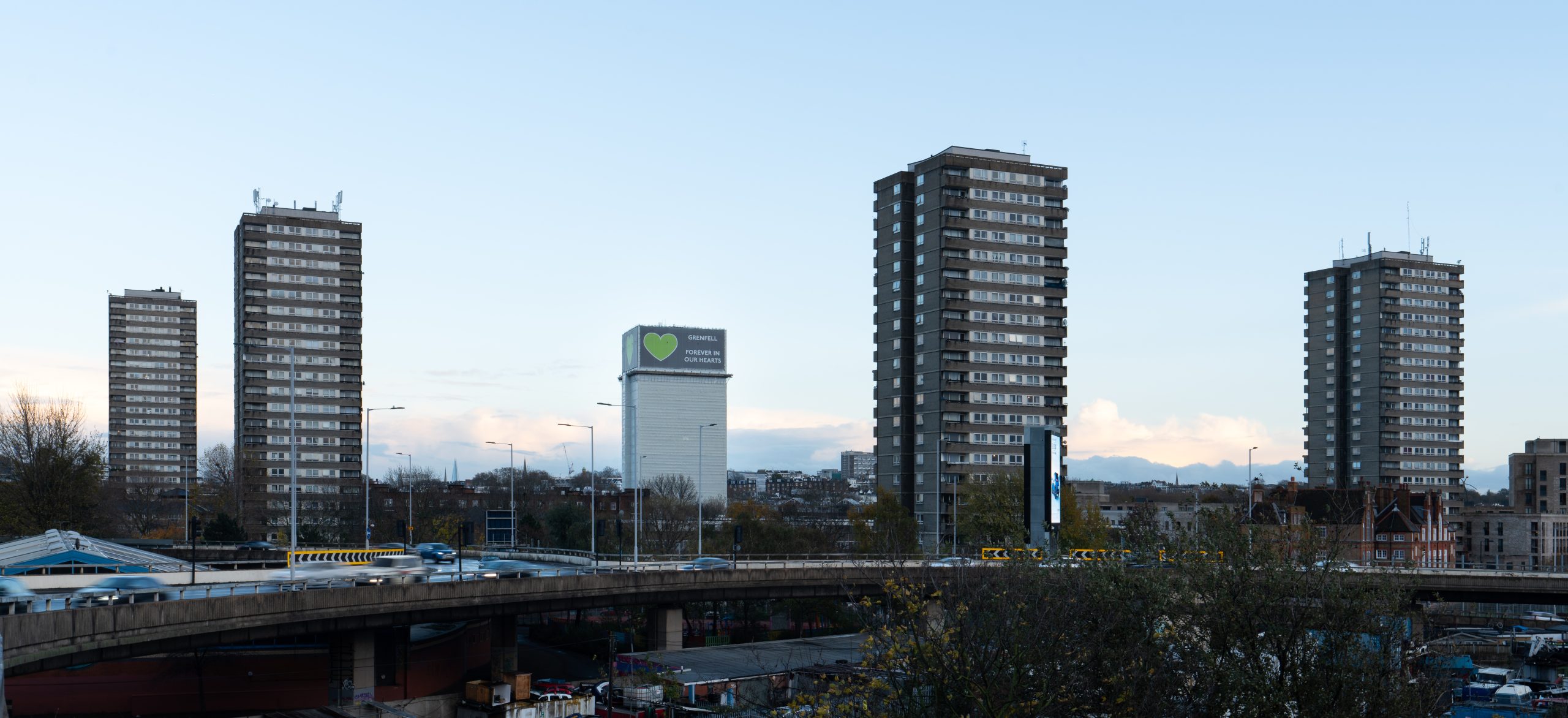
She has lived on the Lancaster West estate, where the Grenfell Tower is currently being demolished, since the age of 15. The family were evacuated from their home in the aftermath of the Grenfell fire. “I remember the police knocking on our door and telling us we had to leave because there were concerns that the tower might collapse” she explains. “My granddad was disabled. I remember having to help him get dressed. We were then put in a hotel. It was a horrible time.”
Rio had already been diagnosed with anxiety and post-traumatic stress disorder before she received the letter from Kensington and Chelsea Council demanding that she leave her family home.
She’s currently receiving therapeutic support from a local hospital and says that her mental health condition has been exacerbated by the threat of homelessness. “I could understand if they wanted to offer me a smaller flat, if they were asking me to downsize but it seems like they don’t want to offer me anything, which doesn’t make sense to me as they had previously offered me my own flat when my nan was alive. They say there’s no space now,” she says.
“The housing officers haven’t seemed concerned about me, just about getting the keys to the flat back. I’ve been grieving my grandmother but I haven’t been able to process that grief properly because I’ve had all of this other stuff to deal with.”
Derrick’s story
Derrick Edwards, 59, another Lancaster Estate resident, was also shocked to receive a notice for possession after his elderly mother died in October 2023. “Earlier that year, we had gone to the estate office to ask to get a two-bedroom flat on the same estate but on the ground floor level,” he explains as we have coffee together in a café in Shepherd’s Bush.
“Our home is a three-bedroom flat on the third floor in one of the walkways. My mother’s mobility was worsening so we needed a more suitable home, but a couple of weeks later my mum took really ill so we didn’t move forward with it. My sister, who lives locally, has bi-polar and I’m also her carer. Between work, caring responsibilities and managing the house, I’ve had a lot on my plate,” he says.
“The housing officers haven’t seemed concerned about me, just about getting the keys to the flat back. I’ve been grieving my grandmother but I haven’t been able to process that grief properly”
Rio Roberts, social housing resident
Derrick received notice for possession in July 2024 and says that when he went to the council to try to get help with his housing case, he was “brushed off” by the housing officers at Kensington Town Hall. “Someone at the town hall’s housing department took down my details but they never got back to me,” he says.
“I imagined that the council would have my back, that they’d just downsize me into a smaller property. Then when I received the letter for the court hearing to take back possession of the flat, I felt hijacked. Even now I’m feeling helpless, abandoned, disrespected, like I’m just a number. I’m 60 next year, where am I going to go?” he asks.
Muddied waters
Some local authorities, such as Kensington and Chelsea, operate a discretionary succession housing policy and this is where the waters get muddied. When asked by HQM about some of the issues, a council spokesperson said they couldn’t comment on individual cases.
Social housing tenancy succession is the process where a qualifying person takes over a deceased tenant’s secure tenancy, provided certain conditions are met, such as being a spouse, civil partner, or a family member who has lived in the property as their main home for at least 12 months.
This process can typically only happen once, and the individual’s eligibility and the specifics of the situation depend on the type and start date of the original tenancy. However, where a local authority operates a discretionary succession policy, there’s flexibility to allow qualifying persons to take over the tenancy of the family home.
Spouses, civil partners and joint tenants usually have a legal right to succeed a social housing tenancy. But other qualifying family members can include parents, children, grandchildren, siblings and others. But their right to succeed depends on the tenancy starting before April 1, 2012 and them living there for at least 12 months before the tenant’s death.
In the cases of the two council tenants that we met up with, they have both had their cases adjourned so that the council can present more evidence for their reasons for not implementing the discretionary policy in their favour.
“I imagined that the council would have my back, that they’d just downsize me into a smaller property. Then when I received the letter for the court hearing to take back possession of the flat, I felt hijacked”
Derrick Edwards, social housing resident
North Kensington Community advocate Jackie Haynes told HQM that the court recognised that there were some good arguments for the defence of the tenants within the succession cases: “The judge decided to take their cases to trial which is what is needed.”
She says that important questions also need to be asked about Kensington and Chelsea’s council housing succession policy: “We need to be asking ‘did the council consult on this policy?’. My view is that they didn’t. In both Derrick and Rio’s cases, the older family members were the named tenants, but they were housed by the council in a time when, traditionally, the men were the head of the households so women and other family members tended not to be named as tenants. In those days, there was no need to worry about the ramifications of a housing crisis. We’re living in very different times,” she adds.
Unfortunately, these types of housing cases aren’t uncommon.
Kyle’s story
Kyle Rolfe, 25, says Ealing Council is asking him to leave his Hanwell flat because of the succession rules. He tells how after his mother died of cancer, he’s now facing eviction from his childhood home that he’s lived in since the age of three.
After his mother’s death, the tenancy was handed over to his older sister by the council. She’s since moved out.
Under the current succession rules, a council home can only be passed on once. But many are questioning whether a change of law is needed because those being evicted tend to end up having to present at the local authority’s homeless unit in a bid to get rehoused.
Kyle tells how he “did the right thing” by letting Ealing Council know that his sister was moving out but he then started to receive letters demanding that he vacated the property. “My mum’s ashes are scattered in the garden. Being here, I feel like I’m with my mum. If I have to leave, I’ll feel like I’m losing her again,” he says.
“In 2022, when my mum was diagnosed with cancer, she had been in the process of going through the right to buy scheme so that we’d be able to have security in our home. We didn’t expect her to go so quickly,” he explains. “I have a younger brother and although I was only 22 at the time, I took it upon myself to look after him until he turned 18.”
Despite numerous attempts to negotiate with the council, Kyle says that he’s been ignored apart from a few letters which refer to him as an “unauthorised occupant”.
Kyle says that he finds it hurtful to be addressed as an “unauthorised occupant”, in a home where he looked after his ill mother: “I’m still struggling with losing her. It’s been really hard.”
An Ealing Council spokesperson said: “We are sorry to hear about Kyle’s situation and understand this must be very difficult for him. National laws mean that council tenancies can only be handed down within a family once.
“This rule was introduced to stop publicly-owned property being passed from generation to generation within one family regardless of the needs of others in the borough.
“In this case, the property was handed down from Kyle’s mother to his sister when she sadly passed away in 2022, which Kyle agreed to. Kyle’s sister told us that she wanted to quit her tenancy. When we serve a notice to quit, we address letters to ‘unauthorised occupants’ because there may be people living at the property we’re unaware of. Going forward, once an account has been set up in Kyle’s name, future letters will be addressed to him.”
“It doesn’t get more morally wrong than someone losing a parent and then being made homeless straight after, but that’s what’s happening”
Kwajo Tweneboa, social housing activist
Kyle has now submitted a rehousing request with Ealing Council and is awaiting an interview. In response to this, the council has said that “no actions will be taken to gain possession of the property until the outcome of Kyle’s rehousing assessment”.
Local authorities around the country have differing policies around succession. For example, Islington Council has a discretionary policy where on the death of a tenant, stepchildren who have been living at the property can succeed the tenancy.
Any social housing occupants looking to apply to succeed a tenancy should study their local authority or housing association’s succession policies, which tend to be publicly available on their websites.
Statistics available on the national picture around council housing succession tenancies are few and far between, with published figures being quite old.
A spokesperson for the Survey of English Housing said: “The number of cases in our samples in recent years for such successions on death for council tenants was very small and it’s not possible to provide any robust statistics for the number of cases that had occurred in each year since 1997. We can only provide a cumulative total.”
Kwajo’s story

Housing activist Kwajo Tweneboa had his own experience of being threatened with eviction after his father died in 2020. “Myself and my two sisters were given an eviction notice after we were bereaved. We were lucky because it was during the Covid pandemic, and they couldn’t just turf people out on to the street,” he says.
“Legally, if not morally, the social housing providers are in a pretty comfortable situation in these cases. It used to be that social housing tenants could pass on their tenancy to any other family member living with them when they died, through succession, but in about the 2010s, many housing providers slowly began changing tenancy agreements to say you could only pass on a property to a wife, husband or civil partner.
“Residents may not read or understand the small print in their agreements and pick up on this, but even if they do, the providers still have the upper hand.
“It doesn’t get more morally wrong than someone losing a parent and then being made homeless straight after, but that’s what’s happening,” he adds.