
Location type: Territorial
Landlord: Mission Australia Housing
Residents: Many have lived on the estate all or most of their lives. Many Aboriginal residents. High levels of disability
Estate size and type: 112 homes for social rent, mix of houses and flats, plus some privately owned homes. Extensive undeveloped land surrounding. Part of a transfer of 1,050 homes to MAH in the northern part of the Mid North Coast in 2019.
Mission Australia Housing (MAH) took over management of the estate at a difficult time in its history. The NSW Government Land and Housing Corporation which owns the land, with the local authority, put forward plans in 2018 to redevelop the estate and provide considerable extra housing, almost all of it private. But many residents were confused by the letter they received about it and some thought they were going to be evicted. Vocal opposition began to build.
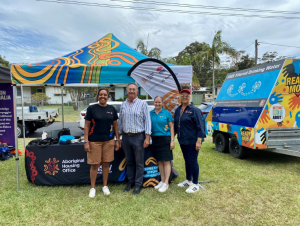
An early task of MAH therefore was to try to rebuild trust with residents when it took on management of the estate from 2019. Community Development Manager for the Mid North Coast Jesse Taylor says the immediate need was to get staff out on the estate, knocking on doors and talking with people. Literacy is low on the estate, which had led to misunderstandings about the proposals, and a digital approach would also have lacked the personal contact needed to establish trust.
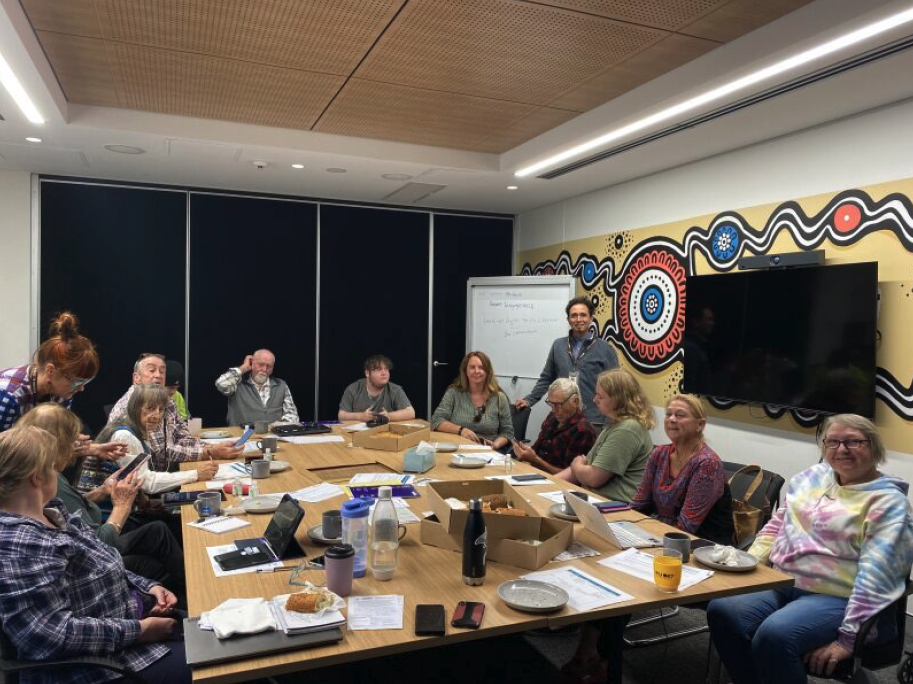
From those beginnings MAH has worked hard to engage with residents across a range of issues. A Tenant Action Group (TAG) provides a focal point for hearing residents’ views and needs, and is aimed at sharing “the tenants’ vision for improving their world,” says Jesse Taylor.
Digital inclusion courses have proved popular. With a grant from the Good Things Foundation, MAH trained TAG members and other residents to act as mentors and carry out the training. They’re offered gift vouchers in return. It’s one of a number of initiatives by the MAH team to lever in resources from elsewhere, avoiding over-stretching their own staff. As Jesse Taylor notes, the demographics and socio-economic indicators on the Argyll estate place it among the most deprived and vulnerable communities, meaning it qualifies for interventions or grants from a number of NGOs (third sector organisations). Other similar initiatives include appointing a youth engagement officer for the estate.
Integrated service delivery, responding to residents’ individual needs, is part of MAH’s overall approach. It seeks to unify two ‘streams’ of tenancy assets and community development. To that end it works with other agencies such as the police and mental health teams to improve and join up services. Argyll suffers particularly from crime and antisocial behaviour, often driven by substance abuse. So, MAH works with the police to ensure a report number from each incident is shared and the landlord can discuss the problems with residents. There have been concerns that housing staff have to step in and deal with situations they’re not equipped for, because health services aren’t engaged or care isn’t coordinated. Today, specialist staff are starting to work with mental health teams under a NSW-wide housing and mental health agreement, walking around the estate and calling on residents together.
Along the way the redevelopment plans for Argyll have been dropped. There’s now a possibility of a new plan, involving much more social housing – but that’s for the future, after much more discussion with residents.
In the meantime MAH has essentially ‘started again’ in working with tenants, first by acknowledging their mistrust and fear, and now by delivering on what it promises. The latest initiative, at Christmas 2023, was another straightforward but highly effective idea: a residents’ fun day. MAH brought together all the agencies involved in Argyll, together with the TAG and others, to create a day of activities and information. In line with MAH’s now firmly established engagement strategy, there was plenty of doorknocking as well as text messaging and easy-read leaflets to get the word out.
As momentum for the event built, a number of agencies began offering extras: high-quality clothing for free, a gift from Santa for every child, and much more. Some residents raised concerns that money was being spent on the event during a cost-of-living crisis. They said food hampers were needed – so MAH ensured there was one for every household. More than 300 people turned out on the day, which proved a huge success also in getting other agencies and social landlords involved. In the aftermath, professionals are seeking meetings and bringing forward ideas to support residents further. For their part, some residents said they had met and talked with neighbours they had never known before, helping to overcome isolation and loneliness.
Jesse Taylor and his team have a number of takeaways from their experience of engaging with residents who had lost trust. They include:
- Do the basics. Knock on doors and talk to people openly – don’t rely on digital
- Create platforms for people to engage with each other
- Integrate your own services and work closely with other agencies to offer tailored support, especially for those with complex needs
- Support residents to create their own vision for their neighbourhood
- Lever in resources via grants – avoid over-stretching your own staff
- Deliver on what you promise.