
Fay Yeomans looks at how East Riding of Yorkshire Council is overcoming political and economic obstacles to ramp up the delivery of new homes.
Over the past seven years, East Riding of Yorkshire Council has been rethinking how it delivers affordable homes across one of England’s largest unitary authorities.
Covering around 950 square miles, much of it rural, the council has had to navigate changes to national policy, rising costs and shifting political priorities. The story is one not just of building houses, but also of dealing with land shortages and finding new ways to serve existing and future tenants. What emerges is a picture of a landlord balancing ambition, realism and long-term planning as it works to provide high-quality, sustainable homes for its communities.
Housing stock under pressure
Between 2019 and 2025, the council added 570 homes to its housing revenue account (HRA) through a mix of new-builds and acquisitions. Yet overall numbers still fell, with total rented stock down by 29 properties.
The biggest pressure has come from the right to buy, which accounted for 465 sales during this period. A further 159 homes left the HRA as part of a major modernisation programme for sheltered housing schemes in Hornsea, Anlaby, Driffield and Bridlington. These properties are being demolished and rebuilt, or undergoing major refurbishment, as part of a 10-year investment plan.
Across these schemes, the council aims to create fit for purpose, more desirable homes that better meet the needs of older and vulnerable residents. In the long term, the ambition is clear: to provide accessible homes that not only improve quality of life but also reduce pressure on adult social care and the NHS.
From ‘Target 1,000’ to a flexible housing delivery programme
In 2021, the council unveiled an ambitious headline goal of 1,000 additional affordable homes by 2026. But, with Covid-19 disrupting supply chains, no pipeline in place at the time and construction costs rising sharply, the target quickly proved unrealistic.
As reality set in the council made a strategic decision, rebranding the programme from ‘Target 1,000’ to simply calling it ‘Council Housing Delivery’, removing rigid deadlines and creating space for a more pragmatic, long-term approach to investment and development.
Since launching its Affordable Homes Programme (2021–2026), the council has delivered 385 new homes, sourced through a diverse mix of routes:
- 45 acquisition and works purchases
- 91 off-the-shelf acquisitions from private developers
- 75 council-led new builds
- 174 Section 106 purchases.
Two council-led schemes were completed in 2024–25, providing 16 rented properties in Withernsea and four more in Beverley.
Looking ahead, 127 new homes, identified for delivery this financial year, are at various stages from fully purchased to early-stage business plan approval.
The search for land: A constant challenge
Finding viable land remains one of the most significant barriers to delivery. Over the last four years, the council has assessed more than 100 sites that ultimately proved unviable. Had they progressed they could have delivered more than 1,000 homes.
The challenges will be familiar to local authorities across the country:
- Limited supply of developable HRA land
- Poor ground conditions and high remediation costs
- High land values for privately owned sites
- Competition from housing associations for Section 106 and off-the-shelf homes
- Limited contractor availability for small council-led projects.
Despite these hurdles, the council continues to explore opportunities with developers and to assess land proactively to maintain a future pipeline.
Shared ownership: Opening up new access to homes
East Riding’s decision to introduce shared ownership in 2018 marked a significant step in broadening access to homeownership in a challenging market. Alongside its 11,275 rented properties, the council now manages 137 shared ownership homes, with shares sold between 10% and 75%.
This choice has proved sound, despite initial problems. Its first scheme for 10 homes in South Cave, developed with Homes England funding, faced early opposition. However, after strong engagement from the Rural Housing Enabler, the parish council got behind the scheme. Properties sold quickly, demonstrating the demand for low-cost homeownership.
Importantly, introducing shared ownership allowed the council to compete for Section 106 homes previously only being offered to housing associations, because developers preferred selling both rented and low-cost properties to a single provider. This mixed tenure approach on council-led developments has also brought forward sites that otherwise would have been unviable, by using shared ownership receipts to cross-subsidise rented homes.
Innovation through stock transfer
One of East Riding’s most noteworthy moments came in 2020, when it acquired 145 affordable homes from Your Housing Group. Believed to be one of the largest stock transfers from a housing association to a local authority at the time, the move brought in properties that were previously overseen from the northwest.
With more than 11,500 tenants and leaseholders already in its care, the council was well placed to bring these homes under local management. For residents, the benefit was straightforward: a landlord with a strong local presence and established repairs and management networks.
Navigating a difficult landscape
Like all social landlords, the council has weathered immense financial pressure in recent years. Construction inflation, higher energy costs, rising interest rates and a post-pandemic repairs backlog all affected its ability to deliver.
Some schemes were paused or cancelled; budgets had to be rebalanced. Even so, investment in existing stock increased to maintain the Decent Homes Standard. Internal procedures were strengthened in readiness for the 2025 implementation of Awaab’s Law.
“Changes in national housing policy, particularly the shift from ‘affordable’ to ‘social’ rent for most new developments, have affected scheme viability. To bridge income gaps, the council uses its flexibility to increase social rents by 5-10% on new builds”
At the same time, changes in national housing policy, particularly the shift from ‘affordable’ to ‘social’ rent for most new developments, have affected scheme viability. To bridge income gaps, the council uses its flexibility to increase social rents by 5-10% on new builds.
At the same time, grant funding can be difficult to secure. Schemes that once required 30% grant support to be viable often now need closer to 50% but typical allocations still hover around 30%.
East Riding also continues to manage the long-term legacy of the 2012 self-financing settlement, when £208m was borrowed to buy out of the centralised subsidy system. Of this, £31.5m has already been repaid, with the next instalment due in 2027.
A turning point: £39 billion and right to buy reform
The 2024 spending review marked a major shift in national housing policy. The announcement of £39 billion for new affordable housing and the introduction of a 10-year rent settlement provides some rare long-term stability for social housing providers.
Crucially, it also reformed the right to buy. From November 2024, discounts to tenants were cut back to pre-2012 levels, falling from £102,400 to a regional cap of £24,000. After a brief spike in RTB applications before the deadline, the council expects sales to fall to around 30 a year.
East Riding was among more than 100 other local authorities that lobbied for reforms through the ‘Securing the Future of Council Housing’ campaign.
Building the pipeline: 1,547 more homes by 2034
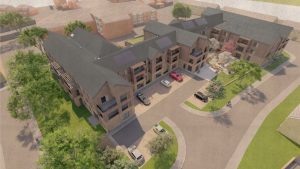
Looking ahead, East Riding aims to deliver 1,547 additional homes between 2025-26 and 2033-34. This long-term pipeline depends on viability, grant funding and partnerships. Ridings Homes, the council’s housing delivery company, is expected to play a key role in unlocking smaller or more complex infill sites.
A major scheme, currently progressing through RIBA Stage 3 design work, will bring around 150 new affordable homes to Bridlington, built in phases with completion expected in 2028-2029. These include accessible bungalows and a mix of flats and houses, with almost a third being for shared ownership.
Four homes in Beverley have already been built to the Future Homes Standard with a fabric-first approach. Another 87 energy efficient properties are in the pipeline for the East Riding over the next two years incorporating:
- Air-source heat pumps
- Triple glazing
- Solar panels
- EV charging points
- Water-efficient systems.
These measures mark a significant step towards the council’s carbon-reduction ambitions.
Unlocking sites through strategic partnerships
Partnership working is increasingly essential to delivery. The council is working with developers to unlock larger sites where multiple providers will deliver different types of homes, from general needs housing to extra-care and accessible, one-level living for older people.
Collaboration has also deepened with the new Hull and East Yorkshire Combined Authority (HEYCA) which aims to create a robust pipeline of development opportunities for both market and affordable housing. Working together the partners hope to:
- Unlock deliverable residential sites
- Increase overall housing delivery
- Scale up affordable housing provision
- Attract more private developers and bring investment to the area
- Support growth and regeneration priorities.
More than £1.2 million in coastal and brownfield funding has already been secured, supporting 104 new affordable homes currently under construction in East Yorkshire.
Sustaining rural communities
Given the council’s predominantly rural geography, supporting smaller communities remains a priority. East Riding continues to champion rural housing delivery via a Defra-funded partnership with North Lincolnshire Council. This has allowed the continuation of the post of Rural Housing Enabler, an important role that helps ensure that small, rural areas, where local people can be forced to move away due to the lack of affordable housing, aren’t left behind.