

 By Lewis Dixon,
Gul-e Project Lead
As the UK accelerates its journey towards a low-carbon future, electric vehicles (EVs) are becoming an integral part of the shift to sustainable transport. Yet, one significant barrier remains for many households – a lack of access to private driveways for convenient charging. This issue disproportionately affects housing association and local authority tenants who often reside in properties without off-street parking, leaving them with limited options for EV ownership.
Innovative solutions like cross-pavement EV charging are set to revolutionise EV accessibility for these communities, offering a greener, more sustainable future. Social housing providers, which manage a large portion of homes without off-street parking, are uniquely positioned to help solve this problem, and benefit from improved tenant satisfaction, alignment with sustainability goals and future-proofing their properties.
The need for accessible EV charging
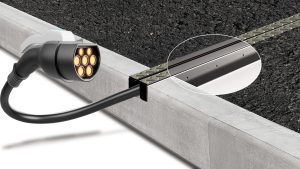
The government’s target to end the sale of new petrol and diesel vehicles by 2035 has driven a surge in electric vehicle adoption. However, a significant number of UK homes – around 40% – lack private driveways or garages, making at-home and overnight charging challenging. In fact, the logistical challenges of charging an EV can be a major deterrent for social housing tenants to switch to greener transportation.
Public charging stations, while expanding, are often inconvenient, expensive and not always located near residential areas. For housing providers, this challenge presents both a hurdle and an opportunity.
No driveway? No problem!
Cross-pavement EV charging solutions, such as Gul-e by ODS, are designed to address the problem head-on. Developed by ODS in partnership with Oxford City Council, Gul-e offers a simple, scalable and cost-effective way for tenants to charge their electric vehicles directly from their homes, even when street parking is their only option.
The system works by running a durable, weatherproof recessed channel across the pavement, allowing tenants to safely connect their EVs to their home electricity supply. By using this cross-pavement channel, residents can avoid the trip hazards of trailing cables while benefiting from overnight charging at lower rates. For housing providers, this technology eliminates the need for costly parking renovations or complex charging infrastructure installations.
Key benefits for housing providers
Adopting cross-pavement EV charging brings numerous benefits to housing providers, making it a smart, forward-thinking investment:
- Supporting sustainability goals
Housing providers are at the forefront of local efforts to reduce carbon emissions, and installing EV charging infrastructure aligns with these broader sustainability targets. Providing EV charging options helps providers contribute directly to the UK’s net-zero goals, encouraging greener transport while improving local air quality. - Future-proofing properties
The demand for EVs is only set to rise, and tenants will increasingly expect access to charging facilities. By installing cross-pavement solutions now, providers can future-proof their properties against growing EV adoption, ensuring their developments remain competitive and attractive to tenants for years to come. - Enhanced tenant satisfaction and retention
EV ownership is expected to grow rapidly, and tenants are likely to prioritise housing options that offer convenient charging facilities. By installing EV charging solutions like Gul-e, housing associations can improve tenant satisfaction by meeting the needs of eco-conscious residents. This, in turn, leads to better retention and higher occupancy rates. - Affordable and scalable
Unlike expensive charging stations or dedicated parking solutions, cross-pavement charging is a cost-effective alternative. The Gul-e system is not only affordable but scalable, allowing providers to install it across multiple properties or developments without extensive infrastructure overhauls. - Avoiding complex planning permissions
One of the advantages of cross-pavement EV charging systems is the minimal disruption to existing infrastructure. The system’s sleek design means it can be installed without significant construction work or the need for complex planning permissions, reducing both the time and cost of deployment.
Forward-thinking local authorities are already working with Gul-e to trial the solution and support EV adoption in their areas. In recent months, Gul-e trials have been rolled out for local authorities, including Solihull Metropolitan Borough Council, Surrey County Council, London Borough of Bromley, Buckinghamshire Council, and Oxfordshire County Council, among others.
A new standard for sustainable housing
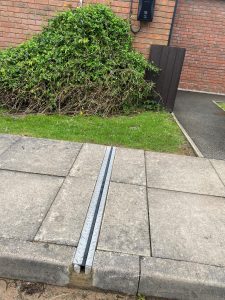
Housing providers have a vital role to play in the UK’s green future. By embracing innovative solutions like cross-pavement charging, these organisations can take an active part in promoting sustainable transport options. Installing cross-pavement EV charging makes EV ownership feasible for tenants, regardless of whether they have access to a private driveway or garage, ensuring no one is left behind in the transition to a low-carbon economy.
As EVs become the standard mode of transport in the coming years, providers that fail to offer charging infrastructure risk falling behind. In contrast, those that adopt forward-thinking, scalable solutions like Gul-e will not only meet the immediate needs of their tenants but also position themselves as leaders in sustainable housing.
For providers looking to explore cross-pavement charging solutions, now is the time to act. Start the journey to an electric future by learning more about Gul-e at www.gul-e.co.uk, or reach out to the team at [email protected] for more details.












One Response
Good idea …..but, Government / councils must be pressed to allocate a road side space outside each house (especially for terraced housing) so cars can be rotated to charge them. I live in a terrace & its difficult to guarantee a space outside your own house.