
Neil Merrick reports on how a housing association’s residents were given a major say over the type of estates offered to tenants in the future.
The residents’ story
 Tenants at settle housing association have spent the past year helping to design quality estates by offering suggestions based on their own experience.
An estate design toolkit unveiled by the association this autumn draws heavily on comments made by its voice of the resident panel, a 13-strong panel that also provides managers with feedback on other matters.
settle owns about 10,500 homes in Bedfordshire, Hertfordshire and South Cambridgeshire. Since evolving from North Hertfordshire Homes six years ago, it’s built or acquired about 1,000 homes. Over the next two years, it expects to build a further 500 for social or affordable rent, or shared ownership.
Suggestions from tenants covered the location of homes, availability of green space, and street lighting. The toolkit is now being used to guide the association’s board in approving developments, and may decide whether settle opts to go ahead with specific schemes.
Annette, a panel member, said she and other members appreciated the opportunity to share their opinions. “I’m proud of the toolkit we’ve helped to create and that it will improve developments for future residents and the wider community,” she adds.
What exactly is a voice of the resident panel?
The panel was set up 18 months ago to do exactly what it says – give residents a voice, along with the opportunity to scrutinise their landlord. It meets once every six weeks, with members able to attend digitally or in person.
During the past year, the panel’s membership was freshened up so it represents a wider range of households, including younger people. To attract those who work during the day, meetings are held in the early evening.
The panel complements settle’s digital engagement forum, made up of 700 residents who offer comments on a range of issues, including the association’s policies and procedures, as well as its corporate plan. “It’s a community within the community,” says Dean Anderson, settle’s executive director for customer services.
settle, says Anderson, is especially keen to hear from dissatisfied tenants, as this shows where the association can improve. “If a cohort of residents is dissatisfied about the same thing, that helps us in analysing the problem,” he adds.
How did the panel become involved in designing estates?
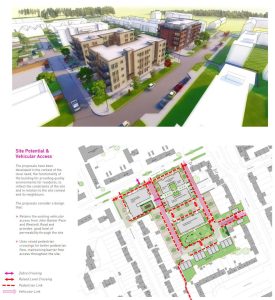
To help design a future estate, residents needed to learn how to interpret plans and review designs and thereby measure quality. This included discussing the merits of housing schemes across the sector, and learning how funds are allocated by Homes England.
Residents were taken on a walking tour of an estate, and shown visuals of how homes and amenities would look when built. TPAS, the tenant engagement group, ran a workshop on measuring quality.
Fiona Coulson, settle’s executive director for development, was impressed by the enthusiasm shown by the panel, even though, in the main, they will not directly benefit from the way new estates are designed in the years to come. “We’re building homes that existing residents won’t necessarily ever live in,” she says.
It took the best part of a year to come up with a matrix of features or themes that project teams use to assess proposed developments. Comments came not just from the panel, but from a survey of 550 residents who had moved into settle properties during the past two to five years.
Why is estate design so important?
Historically, social landlords have prided themselves on providing not just bricks and mortar, but communities where people are proud to live. This means looking at the location of new housing, as well as amenities, such as green space.
Furthermore, as part of new tenant satisfaction measures, landlords in England must show the contribution they make to neighbourhoods, and be able to demonstrate this to the Regulator of Social Housing.
What sort of ideas did settle’s residents come up with?
Comments by the voice of the resident panel, and subsequent survey, led to the following themes being included in the new toolkit:
- Proximity of homes to shops, services and public transport
- Parking and street layouts
- Signposting to cycle routes, footpaths and green space
- Availability of areas to grow food and enjoy nature
- Provision of safe space, playgrounds and amenities for young people
- Public lighting.
As head of partnerships, Shaun Harrison was responsible for feeding the ideas into the matrix and creating the final toolkit. If new estates fail to address themes in the toolkit, project managers must explain why or come up with statements in mitigation.
“The questionnaire asked what people liked or didn’t like about where they live,” he says. “The answers provided a guide for which design questions should be included in the matrix and which elements were most important to residents. All the responses were reviewed in the light of what would improve estate design rather than looking at specific suggestions in terms of cost or practicality.”
Fiona Coulson adds she was surprised by the importance that residents attached to signposting and connectivity. However, ongoing park and rewilding projects are in tune with residents’ desire for more green space.
Not everything suggested through the panel or tenants’ survey is within the gift of the association, she adds, including street lighting, but settle works closely with local authorities over wider amenities and services.
Will any housing schemes be rejected because they fall foul of the toolkit?
Possibly. Along with other social landlords, settle regularly weighs up offers from other developers to build social or affordable housing through section 106 schemes.
The toolkit, explains Shaun Harrison, makes the
association more aware of issues around estates when reviewing such proposals, with the matrix setting parameters in line with the wishes of current residents.
Earlier this year, settle declined to get involved in a scheme because of a lack of outdoor space. “If we don’t think a scheme scores sufficiently well against the matrix, we won’t take it forward for approval,” he says.
Is the toolkit only going to benefit new residents?
Not necessarily. The toolkit will be applied to regeneration schemes, which involve building some new homes for existing tenants. In addition, settle is in the process of consulting residents over neighbourhood plans for three areas where it owns a significant number of homes, with the same themes likely to enter discussions.
Since the pandemic, aspirations have increased with balconies now the norm for flats, and more importance attached to green space.
“We’re in the process of consulting residents to see if they’re happy with what we do and I’ll be staggered if there are no changes,” says Dean Anderson. “The matrix is really helpful in holding conversations with residents.”
What advice would settle offer to other social landlords thinking of involving residents in design decisions?
settle’s toolkit demonstrates how ideas from residents can be weighed up against those of other parties in planning new developments. However, this must be done thoroughly, with tenants confident they’re being consulted for good reason.
“It’s important to allow sufficient time and resource to fully engage residents and involve the right people across the business to input into the process,” says Shaun Harrison.