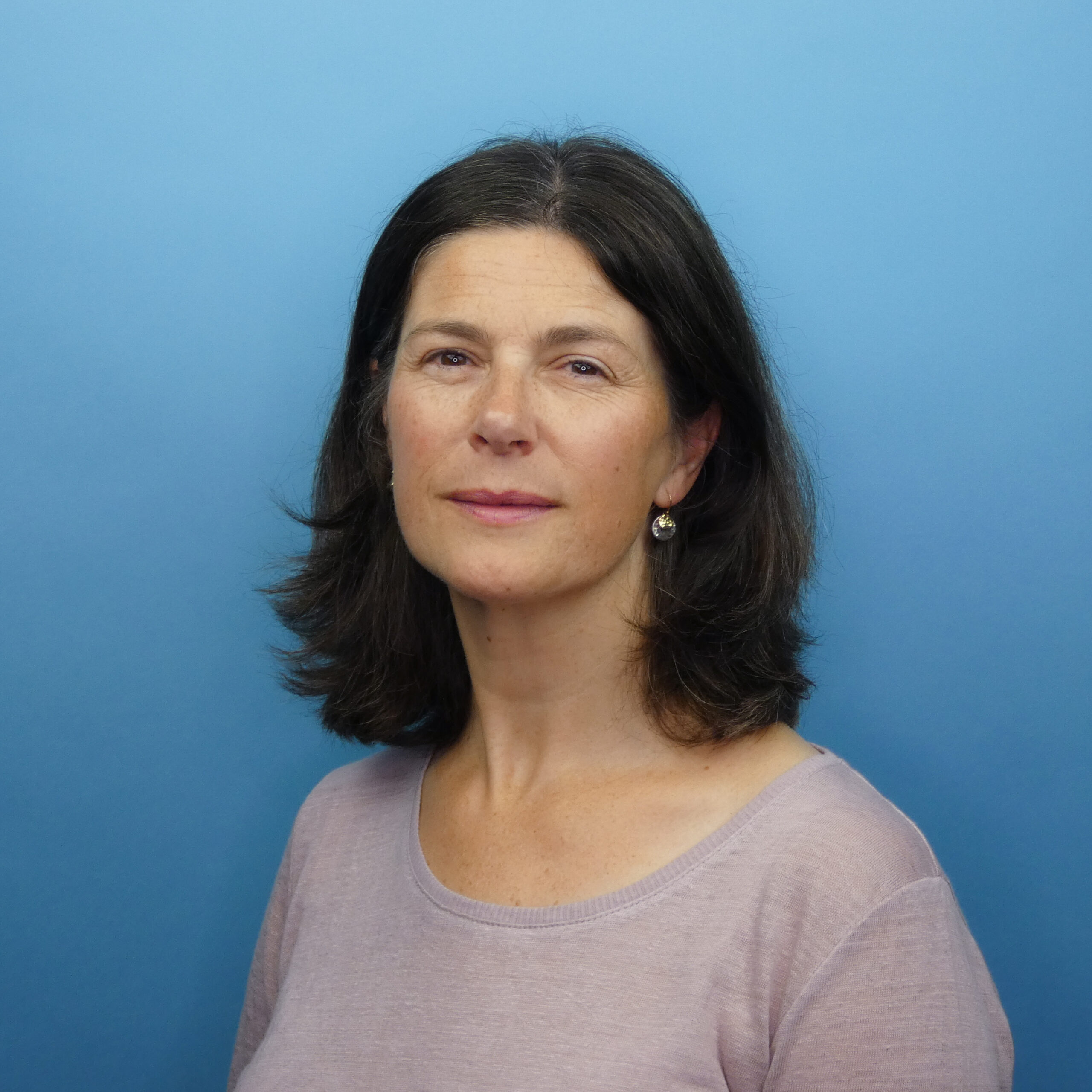

As Director of Policy, Research and Impact at the UK’s biggest food bank charity, the Trussell Trust, Helen Barnard sees firsthand the levels of poverty and destitution thousands of people in the UK are experiencing on a daily basis.
Food bank use is currently at a record high. And with another tough winter approaching, support provided in the upcoming autumn budget is going to be crucial to the prospects of many – and a test of the Labour government’s commitment to tackling poverty.
In this exclusive interview, Helen talks to HQM editor Jon Land about the trust’s vital work, the changes to welfare policy that are desperately needed, the intrinsic link between poor housing and poverty, and why housing associations need to step up as decent landlords and do more for their struggling tenants.
Jon Land: You’ve worked for organisations tackling poverty for a number of years. What drives you as an individual, and where does this passion come from?
Helen Barnard: I was brought up to think that you should use your life to try and improve the lives of the people around you. That you should try and help people, you should try and contribute to your community and so on. I’ve always wanted to do work which I felt was going to be improving – improving the country, improving the community. I started out as a researcher. I came out of university, I was doing contract research for government into housing and benefits and the labour market and education and tax, doing evaluations of different government interventions. And I think what I found was that almost all of the challenges that the country faces, an enormous proportion of the unhappiness and difficulties that individuals face can be traced back to poverty. We want education to give people a good start in life. We want the health service to work well. We want the economy to be firing. All of those things get undercut if you allow poverty to continue in the way it is. So, in a sense, it’s going back to the source and saying, how do we fix this underlying problem that’s blighting people’s lives?
JL: Can you tell us about your current role at the Trussell Trust and what the current food bank and food poverty picture looks like?
HB: I’m director of policy, research and impact. I lead the teams who are researching the scale, the nature, and the drivers of food bank need, developing solutions which we believe can end the need for emergency food, and also evaluating both our own interventions and other people’s interventions to find out what works. At the Trussell Trust, in a sense, we’re doing two things. One is that we’re supporting the community food banks to meet the needs of people. And the other side of our work, which for us is just as important, is trying to create change that will create a future where people don’t need to turn to food banks, where everyone has the income, the support, the services, which means that nobody has to turn to charity for the basics of life.
I have to say the situation on the ground is pretty bleak. The need for food banks in the UK has never been higher. Last year, the food banks in Trussell’s community provided 3.1 million emergency food parcels. Now, that’s a scale I don’t think any of us ever thought we would reach.
“We want education to give people a good start in life. We want the health service to work well. We want the economy to be firing. All of those things get undercut if you allow poverty to continue in the way it is”
It’s the highest number ever in a single year. It’s nearly double the number we provided five years ago. And I think what we’ve been seeing, particularly over the last year or so, is that food banks feel they’re reaching breaking point. They just can’t keep up with the need in their communities.
One of the fears is that we’re heading into another very difficult winter. If you look at the overall package of support available currently, there’s less available this winter because last winter there were cost of living payments going out. There was some support with energy bills. Now, neither of those, I think, were perfect as solutions. We wouldn’t necessarily say, let’s do that again. But having removed those without replacing them with anything, it does mean that people on the lowest income, people on benefits, are actually heading into this with less money in their pockets than last year.
JL: Does that mean we’re pinning our hopes on the autumn budget to come up with something? I’ll talk to you about wider hopes and fears for the Labour government, but just specifically on the autumn budget, what’s the Trussell Trust asking for and what do you actually think you’re going to get from it?
HB: So, yes, we’re urging the government to take urgent action. They came into office with a manifesto commitment to end the need for emergency food. And they’ve reiterated that to us in government. I think they’re genuinely very serious about that. They want to reach the end of this parliament having seen a serious reduction in the scale and the depth of poverty, which is what drives the need for emergency food. Now, I think we’d recognise that this isn’t something you do overnight. If you look at how bad things have got, we’re not going to fix this with one budget or one year. But we do need to start now.
What we’ve been saying to them for this budget is that while we recognise this is a challenging fiscal environment, they need to start updating universal credit. The single biggest driver of the need for emergency food, the need for food banks, is the fact that the social security system is just falling short. Design flaws and the low level of support when you do get it means that universal credit isn’t actually enough to cover the essentials.
“What we’ve been seeing, particularly over the last year or so, is that food banks feel they’re reaching breaking point. They just can’t keep up with the need in their communities”
What we’ve proposed is for the government to put into place a minimum protected floor – basically a level below which nobody will be allowed to fall. With universal credit, an enormous proportion of people don’t get the full amount because some of it’s knocked off to pay debts, mainly to government. You have to wait five weeks for your first payment. Most people haven’t got any savings to tie them over, so they have to take out an advance, which is a loan from the government. That then gets knocked off their payments and they’re left with less money. And we see that people who have got these debt deductions are massively more likely to not be able to eat properly, get into other forms of debt or go without essentials. If they put in this minimum floor, it would mean that debt deductions and also the benefit cap couldn’t take someone’s income below that level. That would start to tackle the deepest forms of poverty. It would start to soften some of the hardest edges of the social security system.
We’re looking for the government to show us how serious they are, to show us they genuinely want to act on these promises. And this minimum floor, it’s not expensive in the realms of government funding. We’ve offered them something which acknowledges that there’s not a lot of spare cash around. This wouldn’t cost them a lot. It’d make a real difference to some of the poorest people. And it would introduce the principle into the system for the first time ever that there should be a floor below which nobody falls.
The other thing that we’re pressing for is the halting of the previous government’s plans to cut support for some groups. For instance, the previous government put into place plans – and therefore into the OBR projections – to freeze local housing allowance again from next year. I suspect many of your readers will be aware of how awful the previous freeze was and the role that had in driving up homelessness. And that really affects food banks.
A third of people who are referred to our food banks are either homeless at the time of referral or were in the last 12 months. And we also see lots of people who are essentially not able to afford food and other essentials because they’re trying to keep up with the rent, because they’re afraid of being made homeless. So, the idea that you would freeze it again is just unconsumable.
“What we’ve been saying to [the government] for this budget is that while we recognise this is a challenging fiscal environment, they need to start updating universal credit…Design flaws and the low level of support when you do get it means that universal credit isn’t actually enough to cover the essentials”
The other thing is, again, the previous government had planned to make some changes to disability benefits, which would effectively cut support for some groups of disabled people. Now, that’s a pretty frightening prospect. About seven in ten people who are referred to Trussell Food Banks are disabled. About a quarter of disabled people already face hunger. And the changes that were planned around the workability assessment, if they continue with those, there would be about 400,000 disabled people who would miss out on income worth about £400 a month. This is an incredibly significant cut and it’s not going to do anything to tackle inactivity or labour market problems. It’s simply making disabled people poorer.
One of the things that we see all the time at food banks is that when people are trapped in this really severe financial hardship, you see them getting sicker and sicker – because if people aren’t eating properly, they can’t put the heating on, they can’t always afford to run medical equipment, they can’t afford the bus fare to a hospital appointment. All of these things, along with the mental health impacts of knowing that you can’t pay your bills and your family’s going without, just pushes people further from the labour market, as well as it just being morally wrong to force people into that situation.
JL: And realistically, do you think you’ll be able to get everything you’ve asked for?
HB: I think we’re all holding our breath for the budget, aren’t we? I think there’s a good chance. I think we’ve offered them some very realistic proposals. We’ve really acknowledged the constraints they’re under. And we’ve said to them, these are things which are in the scale of government spending, really affordable, really practical. I hope it won’t happen but if we had a budget where after all they said, they don’t take any action to start addressing hardship, I think we’d be incredibly disappointed. And there will be millions of people out there who are just holding on, hoping there will be some improvement in support.
JL: In terms of wider Labour policy around welfare, housing and those areas that really matter, how do you feel it’s going so far? Are you holding your nerve given what we’ve seen in the first 100 days?
HB: Yeah. If you set aside some of the ‘communication’ problems they’ve been having and look at the tangible things that they’re doing and they’re planning, I think they’ve actually made a good start. You’ve got the King’s Speech, where they’ve put forward the workers’ rights package and renters’ reforms, both of which include pretty much everything we were looking for. One of the factors that drives people to food banks alongside social security problems is insecure work, low-paid insecure jobs. The renters’ reforms are good. They’ve added in plans to extend Awaab’s Law to the private rented sector as well as the social rented sector. I think that’s really positive.
Those are the two big things but something like the bill to enable bus franchising, when you talk to people on low incomes, one of the big problems they have in getting jobs is that the buses are terrible in lots of places. It’s the same where I live. The bus routes don’t join up with each other. The bus routes don’t go from where people live to where the work is. And it can be a real issue. In the poverty world, we’ve all been saying for ages, they need to do the bus thing. They also extended the Household Support Fund, which was what we had asked them to do on day one. They haven’t confirmed yet what happens after the extension, but the indications are that they realise we need a long-term replacement for it.
“When people are trapped in this really severe financial hardship, you see them getting sicker and sicker – because if people aren’t eating properly, they can’t put the heating on, they can’t always afford to run medical equipment, they can’t afford the bus fare to a hospital appointment”
If you look at what the ministers at the Department for Work and Pensions have said both privately and in public speeches, there appears to be a very serious commitment to ending the need for emergency food, to reforming universal credit, to tackle poverty, and they’ve got some early plans to localise employment support to connect it up with health and other local services. The secretary of state has been very clear she wants the department to move away from a compliance culture, the box-ticking, backed up by punitive sanctions, and she wants them to focus on genuine tailored support. That will be incredibly positive if they can drive that through the department and out into the jobcentre network.
I think a lot of fear has built up for people around jobcentres and work coaches because of this focus on punitive sanctions, particularly for disabled people and carers. If they can encourage people to go there and get support rather than fearing that they’re going to be called in and punished, that would be so important.
JL: Moving on to housing. You must see from your work how important safe and decent affordable housing is to the life chances of some of the poorest people in the country. Where do you think we are in terms of affordable housing provision, social housing, rented housing? And what do you think is going to be required to improve things?
HB: Our broken housing market is one of the biggest drivers of hunger and hardship across the country. In particular, the lack of social homes and the fact that more and more people have been forced into the private rented sector, where the risk of facing hunger and hardship is much higher. For some research that we published just last week, we were looking at the numbers of people facing hunger and hardship. And we found the numbers of people in the private rented sector in that situation had doubled over 20 years. As I said, we see that homelessness is very closely linked to hunger, that about a third of people who refer to Trussell food banks are homeless or have been in the last year. And we know that those sharp rises in homelessness are driven in large part by people losing private sector tendencies because of the insecurity and because of the high cost. And we know that the lack of social housing is a really big part of this, as well as the insecurity in the private rented sector.
“We’re not going to solve the problem of deep poverty and hunger unless we can design a housing market that essentially allows everybody to have a secure, affordable home that’s healthy”
The other thing I think that’s less talked about but is also important, is that people who are stuck in damp, mouldy homes with vermin and so on can’t get the landlord to do anything either because they’re too scared to ask, because they might get kicked out, or they’re just ignored, is a massive part of this whole picture. And we’re not going to solve the problem of deep poverty and hunger unless we can design a housing market that essentially allows everybody to have a secure, affordable home that’s healthy. It sounds basic, doesn’t it? But that’s what the housing market should be delivering for people on every income, in every income bracket. At the moment, it’s just utterly failing. That’s because of design choices. This isn’t a natural system. We need to redesign it.
JL: What’s your view of the social housing sector currently? It’s going through a tricky period, obviously with Grenfell and Awaab, and other quite significant issues. Do you have concerns from what you see in terms of the direction of the housing association sector? Or do you feel things are almost out of their control and they are making the best of what they’ve got?
HB: I think there are two sides to this. It’s undoubtedly true that housing associations have been put in a difficult financial position because of the constraints around them. And we can see that. And I think that in terms of increasing the supply of social homes, that’s going to need more funding, more action from central government, from local government, and also bolstering the ability of housing associations and community associations to bring homes back into the social rented sector in a way that’s being trialled in a few places. So, I’ve a lot of sympathy on that side of things. On the other hand, we do need to hold housing associations and local authorities to account for the quality of the homes they’re providing and the support they provide. It’s not acceptable to say that finances are pushed and therefore we’re just going to ignore tenants asking us to fix problems which are seriously impacting their health and safety. Having said that, some associations are excellent. There are plenty of examples of housing associations that are providing the basics of a healthy home but are also providing positive support, that are connecting people up to other sources of help, and are really trying to do wrap around support for tenants.
But we’ve also seen some terrible examples of social landlords who are essentially trapping tenants in appalling conditions. And treating people with disdain. That was one of the themes from the Grenfell report and from a lot of other examples that we’ve seen – people being treated with an utter lack of respect and dignity. And because somebody doesn’t have economic power, they don’t have the money to just pick up and go somewhere else – they’re treated as if they don’t matter. And that feels to me like it is a basic question of values. It’s what their staff believes is expected of them in how they treat tenants and other people. That’s nothing to do with money.
“We’ve seen some terrible examples of social landlords…trapping tenants in appalling conditions and people being treated with an utter lack of respect and dignity. Because they don’t have the money to just pick up and go somewhere else, they’re treated as if they don’t matter. That feels to me like it’s a basic question of values”
And then there’s some practises which aren’t intended to cause harm, but they do anyway. I was hearing from some food banks just last week who are trying to work with their local housing associations. The policy of having tenants move into a home with no carpets or flooring has been a standard practice in a lot of places. But, of course, a lot of tenants don’t have savings. So, they end living in cold, unhealthy homes, and then they end up getting into unaffordable debt. There’s a housing association down in Surrey who have started to provide carpets and flooring as standard, but also put together a starter package of support for new tenants, which includes things like helping them access grants or low-cost loans to make the house liveable. They found that it was so successful, they extended it to all their tenants. It’s good for tenants, but it also means things like your rent arrears go down and people are able to sustain their tenancies far better.
But my sense is you’ve got some individual housing associations choosing to do these things. What I think we need is the sector as a whole to move to a set of standards that protect low-income tenants so they don’t have this negative start to the tenancy. We need an agreed set of values combined with practical support.
Food bank facts and figures
- The Trussell Trust is the UK’s leading food bank charity with 1,400 food bank locations and 36,000 volunteers
- Between April 2023 and March 2024, the number of people that used a food bank for the first time was 655,000
- During the same period, more than 3.1 million emergency food parcels were distributed to people facing hardship – an increase of 94% over the past five years
- More than 1.1 million of these parcels were distributed for children.