
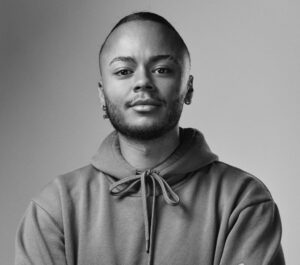
 It’s fair to say that Kwajo has single-handedly been one of the key drivers of change in the social housing sector since first coming to prominence in 2021, when he tweeted about watching his father die in a flat that wasn’t fit to live in.
What was initially a personal campaign to highlight the poor treatment his family received from their housing associations, soon became a national mission as more and more tenants got in touch to say they’d similar experiences of living in poor-quality social housing.
Since then, Kwajo has become the UK’s most well-known housing activist, regularly appearing on TV, meeting with the secretary of state and hosting his own Channel 4 documentary.
On the eve of the publication of his first book, Our Country in Crisis: Britain’s Housing Emergency and How We Rebuild, Jon Land joined Kwajo to discuss his life and career as well as his continuing investigations into the sorry state of British housing.
HQM: Working with Sky News, you’ve just published some shocking findings into the number of empty council homes in England. How did this investigation come about and have you got to the bottom of why there are so many empty properties?
Kwajo: I knew there were empty properties. I’ve been doing this campaign work for a very long time and I knew there were going to be lots of empty properties because I’ve seen them everywhere I go.
So, I decided to FOI every single council across England. I did also reach out to housing associations, but, of course, they decided they didn’t want to respond. But I did find government data on housing associations, so I got the numbers I wanted in the end.
But in terms of the councils, we FOI’d all of them – myself and Becky and Nick from Sky News. We waited for the results to come back and they started pouring in and they were absolutely shocking. I mean, I expected maybe a few thousand, but there are nearly 34,000 empty council homes right now across England during Britain’s biggest social housing crisis. When 1.3 million people are waiting to get into social housing and we have 145,000 homeless kids, that, for me, was enough of an answer, and I think it was an absolute disgrace, regardless of whatever excuse they tried to use.
It’s not justified whatsoever. Those homes absolutely should be re-let. I can argue it from the perspective of those that are homeless, and I can argue it from the point of financial literacy on behalf of councils. They claim they’re worried about going bankrupt, but are sitting – in some cases, for decades – on homes which aren’t collecting rent, but also complaining that they don’t have enough funding.
I’m the first to argue that councils need funding. But there’s a huge question here about severe systemic mismanagement when it comes to finances and when it comes to managing their homes. They’re spending £2 billion this year on temporary accommodation from temporary accommodation providers, private management companies, hotels, private landlords, at, in the majority cases, inflated prices, when at the same time, they’re sat on tens of thousands of empty homes. They could use that money to bring up the standard and re-let these properties, either for temporary accommodation or permanent social homes, but they’ve chosen not to do that.
Some of them, by the way, just completely haven’t got a clue they’ve even got these homes. They’ve lost track of them. People are moved out for antisocial behaviour or whatever reason and then the home’s empty for years because they forget they even owned it. Stock management is so poor, especially across large areas.
Our annual conference takes place on the day your first book is published. So, obviously, we’re delighted to have you as a guest. It must be a very proud moment for you. Can you tell us a bit about the book and the journey behind it?
Yeah, it’s a very proud moment because I’ve been writing this for about two years now. I was very much in the middle of campaigning and I was seeing a lot of things. I talk about everything. Often, I go and do news interviews which are two minutes long, and I try and get as much as I can into them news interviews. But this book is very different. I pulled out everything that I know, everything that I’ve seen, everything that I’ve been through – my own story from the very beginning, up until meeting and speaking to people going through absolutely horrific things, as well as some of the big news stories housing-wise that we’ve seen over the years. It’s a collection of all of that, as well as a wake-up call, I think, to Westminster and politicians, making it clear where they’ve failed, what their responsibilities are and what they should be, what their priorities should be, and what it’ll take to fix the housing crisis, or what I perceive the solutions to the housing crisis would be.
“If Grenfell is to happen again, it’ll be the regulator that’s held to account, especially if they had the opportunity to investigate and hold a provider to account before disaster happened”
At the end of the book, it ties back into real people and making it clear that their voices matter. What I’ve tried to do is demonstrate and make it as clear as possible how housing in this country, and a lack of access to decent and safe housing, affects other areas of people’s lives and the social issues that we face – whether it’s the NHS, education, crime, poverty, immigration. I’ve looked at all of them through the lens of housing or a lack of access to housing, and I hope it’ll be an interesting read to people.
I mean, there are some horrific stories in there. No doubt people will be upset. I was upset writing it at points and especially going through the audiobook and going over it. I’ve spoken to survivors of Grenfell. I’ve spoken to the parents of Awaab Ishak, the two-year-old boy who died in Rochdale as a result of living in a home filled with damp and mould. I’ve covered stories about people who were severely ill, had their benefits cut and died.
I’ve written about people being discovered dead in their council or housing association homes after many, many years. It covers a lot, I think. Our country is in crisis, and I want the book to be an opportunity to learn and absorb some of the potential solutions. I’m glad there have been some politicians and quite well-known faces and journalists who have read it and think just that.
When you look back on the last few years, did you ever think you would end up as one of the country’s top housing activists? Does it feel a bit weird sometimes?
It does. I mean, I’ve never had a degree or anything or studied housing. I’ve probably learned so much more by actually being thrown in the deep end of things and doing the theory and going out there and dragging my suitcase up and down the country, speaking to people, actually going through it. I’ve been forced to learn policies. I’ve been forced to have to learn legislation as well as what’s right, what’s wrong, laws behind it, talking to solicitors and legal practitioners. I never thought I’d find myself in the situation I find myself in now.
My intention a few years ago never was to be a housing person. If someone had told me years ago that this is what I’d be doing, I would have thought, ‘boring’. In fact, I spoke to my head teacher a few years ago and it’s so funny now looking back because she reminded me that we once did a project on what you want to do for a career. And I said property developer! So, I’m in no doubt that my life has taken a 180-degree turn. And I have to say I much prefer what I’m doing now. I really, really do. And I’ve learnt so much. It’s cool.
You could still be a property developer in years to come?
I could, yeah. I could set up my own, I don’t know, massive housing, social housing thing. I don’t know.
You’re still investigating dire housing conditions all over the country and beyond. Do you feel anything has changed since you started your campaign work? What’s your view of social landlords now as compared to a few years ago? Do you feel they’re finally getting the message?
Well, people are talking about it a lot now, and I think that’s why they get the message. Had it died down in the very beginning, things would have continued like it was then, and perhaps, arguably, things would be a lot worse now. But social housing landlords have been forced to recognise that this is a national problem because the pressure really has been applied.
“I spoke to my head teacher a few years ago and it’s so funny now looking back because she reminded me that we once did a project on what you want to do for a career. And I said property developer!”
In many cases, they’ve been shamed into taking accountability, which never should’ve happened. I’m sure there’s one or two social housing providers that still are naive and think ‘that could never be us’. That’s what a lot of housing chief executives were saying in the very beginning. Then myself or someone like ITV news, BBC news or Sky news, rocks up at their homes with a camera crew and it’s on TV first thing in the morning and suddenly they’re forced to take accountability and responsibility and realise, well, actually, it could be one of our homes. Because, in reality, it’s a systemic issue and it’s across the sector.
There are still major problems. I still have people reach out to me. Do I think enough has happened? No. Would I like to see more investment and changes in direction? Absolutely. What saddens me and makes me angry, and I aim fire directly at housing boards and housing association chief executives here, is this is seven years after Grenfell. Seven years on after 72 people lost their lives, the sector turned around and said things would change. Have they done enough of a good job to change things? Absolutely not. They’ve failed. It’s been seven years!
Things really have to change, and they really have to put their weight behind it. It’s not enough just to stick platitudes on their website that things are going to change, because housing associations and councils are very good at marketing and very good at writing things on their website that don’t necessarily translate to what’s happening behind the closed doors of residents.
They need to make sure that action is put before words because so many people continue to suffer and people will continue to die. Often, housing staff say, and I do believe them, they go into the sector, they go into housing because they care, but I think they need a wake-up call, – sometimes they simply don’t know what’s happening at a grassroots level. Sometimes, chief executives become too comfortable with their six-figure salaries, sitting in their nice offices and comfy daily routines and they forget who it is that they’re providing the service to and what’s happening back down on Earth in people’s homes.
Do you think the Social Housing (Regulation) Act will make a difference?
I hope so. It’s going to take time to see. I don’t know if the right word is impartial, but I hope there isn’t any landlord bias or anything like that behind the regulator’s decisions. I hope they base decisions on what it is they’re seeing. I hope that they enforce the regulation. I hope that they are strict and firm because this is about people’s lives. If Grenfell is to happen again, it’ll be the regulator that’s held to account, especially if they had the opportunity to investigate and hold a provider to account before disaster happened. I really hope that that’s what they do. They say that’s what they’re going to do. For far too long, the sector had little or no regulation. It’s the same with the private sector. Regulation isn’t a bad thing. It just means people have to do their jobs to a standard which is required. With any job, that should be the case. There should be a standard set that people have to follow.
What would you like to see from the new government in its first 100 days from a housing perspective?
Commitment to investing massively into building quality social housing, commitment to raising standards across social housing, commitment to investing in councils. I’d like to see commitment to leasehold reform, an urgent commitment to that. I’d like to see an overhaul when it comes to the private rented sector and acknowledgement that things have to change there. We have to be looking at rents. We have to be looking at how much people are being charged. We have to look at the quality of homes that private renters are living in. I’d love to see commitments on empty homes, and a proper empty homes policy, and scrutiny of local authorities when it comes to their empty homes, as well as private management firms and landlords. I’d like to see a massive focus on the right areas of housing and a genuine understanding that, no, housing isn’t just about homeownership, homeownership, homeownership, but a fundamental human right for every single one of us.
“What saddens me and makes me angry, and I aim fire directly at housing boards and housing association chief executives here, is this is seven years after Grenfell. Seven years on after 72 people lost their lives, the sector turned around and said things would change. Have they done enough of a good job to change things? Absolutely not. They’ve failed”
What do you think the future holds for Kwajo? Are you going to carry on being an activist in terms of housing or other areas, or would you look to move into politics or the media in the future?
It’s a good question. Right now, I’m very comfortable being a campaigner, and I think in my heart, I’ll forever be a housing campaigner and a champion for housing because that’s my life, basically. I like having an effect at grassroots level. I like speaking to people that often aren’t heard, the people who are the backbone of this country. For now, I feel very comfortable doing that, but my life is changing. I feel like I’m at a point where things are beginning to shift
I’ve been asked a lot, will you go into politics? I’m not closed off to that. I don’t know if now is the right time for me. Sometimes you can change things from the outside but in order to have control of that steering wheel, you have to be on the inside. Perhaps that’s what it’s going to take. I often talk about wanting to see more working class representation of people that look like me in Westminster. Sometimes you have to be that person and actually open the door for others. We’ve seen politicians like Diane Abbott do that and others, so who knows?
But I also love the work I’ve been doing with the media, working alongside them. I’ve enjoyed seeing the world of media and how things work on the inside, but also the power that they have to genuinely change lives when they focus on the real things. Look at how Daniel Hewitt and ITV changed the lives of so many people when they started going into people’s homes and exposing the conditions they were living in, how they were able to go toe-to-toe with chief executives, how they were able to get these issues talked about in parliament. That’s the power that media and journalists have.