Darren McGarvey is a man in demand. Since his book Poverty Safari: Understanding the Anger of Britain’s Underclass won the prestigious Orwell prize back in 2018, the political activist, rapper and broadcaster has become a much sought after social commentator, renowned for his unflinching yet perceptive views on the state of 21st century Britain.
 An authentic working-class voice, his recent BBC documentary ‘Darren McGarvey: The State We’re In’ lifted the lid on the state of the UK’s public services, and in August he takes his very personal show ‘Trauma Industrial Complex – Trauma and Oversharing in the Age of Lived Experience’ to the Edinburgh Fringe.
Ahead of his keynote session at this year’s HQN annual conference, Darren sits down with Jon Land and Alistair McIntosh to talk about the response to his BBC series, the housing crisis and his current projects.
HQM: It’s been a busy year for you. Were you happy with how your BBC documentary series was received? And do you feel it’s resonated with the public and/or policymakers?
Darren: Yes, it was a bit nerve-wracking, to be honest. It was the biggest thing that I’ve done in terms of television work. It was a tough shoot and the process of getting the thing over the line at the end was a bit of a shock to the system, but it was a good experience. And as far as I could tell, the people who watched it, it resonated strongly with them. And even though I had my own concerns that maybe we’d taken too many teeth out of the thing in order to make it palatable for a mainstream British audience, it still felt like something that had a bit of an edge to it when compared to most other stuff on television. So, I was quite satisfied with that. And also to get a one-star review from a sneering Daily Mail column, that was one of my greatest accolades.
“There are always politicians who talk about building more homes that are ‘affordable’. But even the affordable homes aren’t really affordable. They’re just not. For the average person, you’re still priced out of that”
Have you had follow-up conversations with people in the sectors that you focused on?
Yes. Obviously, there was a spike in visibility, which creates a level of interest, and people contact you. But to be honest, I’m contacted throughout the year by quangos and charities, and sometimes even directly by MPs. Although I tend not to engage too much with politicians directly, we did send them all a copy of the Social Distance Between Us. When it was first published, every MP in Westminster got a copy of that book sent directly to them. But really, the book was not necessarily for leaders and politicians. It was more the concept behind it. For me, it was like a reference book for anyone who wanted to look at inequality in the UK in this post-Covid period, something that they could pick up and see what’s going on in education, or the labour market, or housing, health, cultural stuff, criminal justice etc. That’s why the book ended up being a little longer than probably it should’ve been. But once you start, once it’s in motion, it just becomes its own thing, and you’ve got to submit to the will of the book.
We wanted to get your thoughts on the future of public services in the UK, regardless of who forms the next government and perhaps how you would go about addressing some of the fundamental issues.
I think what I’d like to see isn’t politically possible currently. I mean, much is made of how little a difference there seems to be between the two main parties and the frustration with that. On the ground, in communities, people can feel the pressure coming from every single angle. Even today, the local authority in my area have issued a warning to us that if we’ve not packed our bins correctly, then they will be tagged and left on the street. So, they’ve turned refuse collection into some weird game show where everyone’s anxious about whether their bin will get collected. But we know this is just a cost-cutting exercise. It’s just all about cutting costs because local authorities are all running massive deficits, some are declaring bankruptcy.
So, there’s a more fundamental question because, obviously, when you’re a political partisan, it’s very easy to attribute the blame to a specific party, whether it’s local, national or sometimes even international. But when you actually look around the UK or you’ve travelled around the UK as I have, you see that no matter who’s in power, whether it’s Wales, London, or Scotland, everyone is dealing with the same problems. They just have a different language and lexicon to describe it and the parties have a different range of possible solutions they’d be prepared to carry out. And when you really get down to it, the issue in the UK is far more fundamental. It’s about what does the new economic settlement look like? What’s the new vision for society? And, currently, politicians don’t feel that culturally the country is in a place where we can be that bold, unfortunately.
“The political nightmare that’s been created for anyone who wants to address the housing crisis is that they have to take action that would lower the value of all homeowners’ properties. And the homeowners are the key demographic that the centre-ground…have to appeal to because they’re the people who will turn up to vote”
As someone who grew up on a council estate, do you feel social housing is a force for good in this country? Or do you see it as an integral part of what you’ve referred to previously as “the poverty industry”?
Up until not long ago, there was no shame in having a council house (that’s what they were called before they were all sold off to social housing operators and became essentially privatised). They’re still there and there’s still a level of social utility and responsibility, but I know that they’re run a bit differently now. The issue is that as a result of the economic liberalisation that occurred, a central cultural prong of that was to create this ‘cult of homeownership’, which made fashionable the idea of getting into huge amount of debt to purchase a house or, in some cases, not so much debt to purchase a council house. And, ultimately, this created a situation where to not own your home is a mark against your prestige as a person. And that was a significant shift.
Now, the idea of owning property and the idea of that facility being available to ordinary people and not just the landed gentry or wealthy people, is in essence a good idea, but you also have to take care of the social housing stock for people who, one, don’t buy into that, and, two, can’t afford to get into that. So, the situation that we have right now is that the rental market takes up a lot of the slack here. Unfortunately, this isn’t sustainable for people who aren’t earning enough to live, even more so when you factor in the constant rising costs associated with the rental market and where there aren’t any real protections against evictions and market fluctuations.
“Most people with trauma don’t know they have it, and most people with trauma wouldn’t be caught dead speaking about it publicly”
There’s huge demand. And again, you have to look at the politics underneath that. The political nightmare that’s been created for anyone who wants to address the housing crisis is that they have to take action that would lower the value of all homeowners’ properties. And the homeowners are the key demographic that the centre-ground, keenly-attuned politicians have to appeal to because they’re the people who will turn up to vote, as they’re the most invested in the current economy. Unfortunately, that means that those living in the rental market are always with their backs against the wall and the landlords have all the power. I don’t think that’s fair but I also don’t think politicians have the kahoonas to truly address the issue.
Have you got any thoughts about how to tackle some of the fundamentals of the housing crisis? What would you do?
There are always politicians who talk about building more homes that are ‘affordable’. But even the affordable homes aren’t really affordable. They’re just not. I mean, for the average person, you’re still priced out of that. There are lots of initiatives to encourage people to get on the housing ladder. But, ultimately, one of the biggest barriers for the ordinary person is that they can’t get acknowledged for their level of financial responsibility simply by paying rent on time for years and years and years. So, they’ve got to jump through all these hoops. They’ve got to get a big deposit together. And, ultimately, the market isn’t really set up for the average person, a young person. Maybe they’re just coming out of education, maybe they have a young family. And one of the reasons for that is just that the people who represent the homeowners and the housebuilders, they have such a big voice when it comes to how policy is designed and how policy is implemented. And really, when you get down to it, those are the ones that are going to have the ear of the politicians when decisions are being made.
As for tenants and tenant unions – they’ve often only got a tokenistic role, or they’re seen as campaigners and activists on the outside of a process, shouting in, unfortunately.
Looking ahead, Darren, you’ve got your Edinburgh Fringe shows in August. They seem to be quite personal. Do you want to tell us about those?
Certainly. Basically, I’m working on a book which is going to hopefully say something new about the current conversation that’s going on in society about trauma. Trauma is a word that’s moved from being a strictly clinical term to a colloquial term that we all use now to describe varying levels of distress that we experience. And in that colloquialisation of the term, there’s the resulting flattening out of what it actually means. So, using my own lived experience, I hope to explore what trauma is, what it isn’t, some of the dynamics and incentives at play, where – in the absence of clinical guidance and public services which offer it – people are forced to turn to the internet for answers. And online, it’s highly unregulated. Online, you have therapists with questionable qualifications who are making vague statements about people’s level of trauma that aren’t always applicable to our circumstances. And so I feel that with my lived experience of trauma and with my lived experience of telling my story of trauma, then, ultimately, I want to caution people about rushing out there thinking that by talking about the bad things that happened to you, somehow a catharsis is going to come, because that’s not necessarily the true story of what happens.
So, at the Fringe, and with other strands to this wider project that will culminate in a book, I hope to speak to experts, people with lived experience who live life in the public eye, like comedian Janey Godley, for example, or trauma campaigners like Suzanne Zeedyk and James Doherty in Scotland, and really just get into a deeper discussion, which obviously recognises that people who have trauma or think they have trauma must be treated sensitively.
“The local authority in my area have issued a warning that if we haven’t packed our bins correctly, then they will be tagged and left on the street. So, they’ve turned refuse collection into some weird game show…But we know this is just a cost-cutting exercise”
But we must also be careful that we don’t begin to use individuals with lived experience of something as avatars for everyone else out there who suffers from that thing. Because people who are willing to talk publicly about things repeatedly – we’re a distinct class of people within the trauma discussion. Most people with trauma don’t know they have it, and most people with trauma wouldn’t be caught dead speaking about it publicly. It’s one of those topics that people won’t necessarily signal their views or opinions about publicly because it’s very sensitive. But they’re always very happy to hear someone else who perhaps is brave enough or has a platform where they can sensitively navigate the terrain around the topic that obviously is very, very important. So, a lot of it [the show] is up here in my mind, but at the same time, there’s an appetite for it. I’ve done a few public speaking gigs now around the UK.
Are you still making music?
I am, yes. I’m working on a record right now, which is a strand of the Trauma Project. And the album ultimately has a bit more of an artistic licence, which is going to be fun for me. We just finished the lead single last month, finished mixing it. We’re now in production meetings about the video for it. And, ultimately, the album which is going to be less hip-hop driven, but still have a hip-hop ethic, will be an attempt, I think, to pull in a slightly broader audience by just making the musical aesthetic a little less harsh for people who are not used to the hip-hop sound. But it’s an exploration of my story, my interpretation of my story. It’s also a cautionary tale for people out there who run with any narrative in their mind that is memory-based and hasn’t perhaps been subjected to the full light of analysis. We can tell ourselves a story in order that we can live with whatever our life has turned out like. But that story might not be as true as we think. That can be applied to specific incidents that happened, or it could be applied to the intent and culpability of those who harmed us. It can be applied to the assumptions that we make about the other people who were around and what they could or couldn’t have done in order to stop what happened not happening.
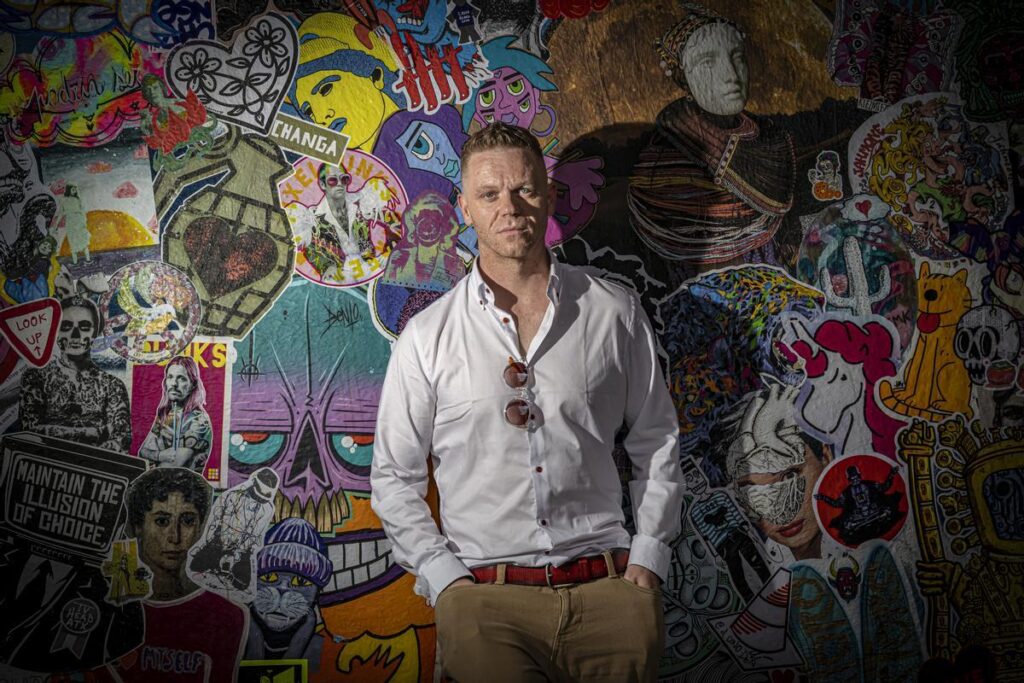


Darren McGarvey interview: “A one-star review from a sneering Daily Mail was one of my greatest accolades”
Darren McGarvey is a man in demand. Since his book Poverty Safari: Understanding the Anger of Britain’s Underclass won the prestigious Orwell prize back in 2018, the political activist, rapper and broadcaster has become a much sought after social commentator, renowned for his unflinching yet perceptive views on the state of 21st century Britain.
Ahead of his keynote session at this year’s HQN annual conference, Darren sits down with Jon Land and Alistair McIntosh to talk about the response to his BBC series, the housing crisis and his current projects.
HQM: It’s been a busy year for you. Were you happy with how your BBC documentary series was received? And do you feel it’s resonated with the public and/or policymakers?
Darren: Yes, it was a bit nerve-wracking, to be honest. It was the biggest thing that I’ve done in terms of television work. It was a tough shoot and the process of getting the thing over the line at the end was a bit of a shock to the system, but it was a good experience. And as far as I could tell, the people who watched it, it resonated strongly with them. And even though I had my own concerns that maybe we’d taken too many teeth out of the thing in order to make it palatable for a mainstream British audience, it still felt like something that had a bit of an edge to it when compared to most other stuff on television. So, I was quite satisfied with that. And also to get a one-star review from a sneering Daily Mail column, that was one of my greatest accolades.
Have you had follow-up conversations with people in the sectors that you focused on?
Yes. Obviously, there was a spike in visibility, which creates a level of interest, and people contact you. But to be honest, I’m contacted throughout the year by quangos and charities, and sometimes even directly by MPs. Although I tend not to engage too much with politicians directly, we did send them all a copy of the Social Distance Between Us. When it was first published, every MP in Westminster got a copy of that book sent directly to them. But really, the book was not necessarily for leaders and politicians. It was more the concept behind it. For me, it was like a reference book for anyone who wanted to look at inequality in the UK in this post-Covid period, something that they could pick up and see what’s going on in education, or the labour market, or housing, health, cultural stuff, criminal justice etc. That’s why the book ended up being a little longer than probably it should’ve been. But once you start, once it’s in motion, it just becomes its own thing, and you’ve got to submit to the will of the book.
We wanted to get your thoughts on the future of public services in the UK, regardless of who forms the next government and perhaps how you would go about addressing some of the fundamental issues.
I think what I’d like to see isn’t politically possible currently. I mean, much is made of how little a difference there seems to be between the two main parties and the frustration with that. On the ground, in communities, people can feel the pressure coming from every single angle. Even today, the local authority in my area have issued a warning to us that if we’ve not packed our bins correctly, then they will be tagged and left on the street. So, they’ve turned refuse collection into some weird game show where everyone’s anxious about whether their bin will get collected. But we know this is just a cost-cutting exercise. It’s just all about cutting costs because local authorities are all running massive deficits, some are declaring bankruptcy.
So, there’s a more fundamental question because, obviously, when you’re a political partisan, it’s very easy to attribute the blame to a specific party, whether it’s local, national or sometimes even international. But when you actually look around the UK or you’ve travelled around the UK as I have, you see that no matter who’s in power, whether it’s Wales, London, or Scotland, everyone is dealing with the same problems. They just have a different language and lexicon to describe it and the parties have a different range of possible solutions they’d be prepared to carry out. And when you really get down to it, the issue in the UK is far more fundamental. It’s about what does the new economic settlement look like? What’s the new vision for society? And, currently, politicians don’t feel that culturally the country is in a place where we can be that bold, unfortunately.
As someone who grew up on a council estate, do you feel social housing is a force for good in this country? Or do you see it as an integral part of what you’ve referred to previously as “the poverty industry”?
Up until not long ago, there was no shame in having a council house (that’s what they were called before they were all sold off to social housing operators and became essentially privatised). They’re still there and there’s still a level of social utility and responsibility, but I know that they’re run a bit differently now. The issue is that as a result of the economic liberalisation that occurred, a central cultural prong of that was to create this ‘cult of homeownership’, which made fashionable the idea of getting into huge amount of debt to purchase a house or, in some cases, not so much debt to purchase a council house. And, ultimately, this created a situation where to not own your home is a mark against your prestige as a person. And that was a significant shift.
Now, the idea of owning property and the idea of that facility being available to ordinary people and not just the landed gentry or wealthy people, is in essence a good idea, but you also have to take care of the social housing stock for people who, one, don’t buy into that, and, two, can’t afford to get into that. So, the situation that we have right now is that the rental market takes up a lot of the slack here. Unfortunately, this isn’t sustainable for people who aren’t earning enough to live, even more so when you factor in the constant rising costs associated with the rental market and where there aren’t any real protections against evictions and market fluctuations.
There’s huge demand. And again, you have to look at the politics underneath that. The political nightmare that’s been created for anyone who wants to address the housing crisis is that they have to take action that would lower the value of all homeowners’ properties. And the homeowners are the key demographic that the centre-ground, keenly-attuned politicians have to appeal to because they’re the people who will turn up to vote, as they’re the most invested in the current economy. Unfortunately, that means that those living in the rental market are always with their backs against the wall and the landlords have all the power. I don’t think that’s fair but I also don’t think politicians have the kahoonas to truly address the issue.
Have you got any thoughts about how to tackle some of the fundamentals of the housing crisis? What would you do?
There are always politicians who talk about building more homes that are ‘affordable’. But even the affordable homes aren’t really affordable. They’re just not. I mean, for the average person, you’re still priced out of that. There are lots of initiatives to encourage people to get on the housing ladder. But, ultimately, one of the biggest barriers for the ordinary person is that they can’t get acknowledged for their level of financial responsibility simply by paying rent on time for years and years and years. So, they’ve got to jump through all these hoops. They’ve got to get a big deposit together. And, ultimately, the market isn’t really set up for the average person, a young person. Maybe they’re just coming out of education, maybe they have a young family. And one of the reasons for that is just that the people who represent the homeowners and the housebuilders, they have such a big voice when it comes to how policy is designed and how policy is implemented. And really, when you get down to it, those are the ones that are going to have the ear of the politicians when decisions are being made.
As for tenants and tenant unions – they’ve often only got a tokenistic role, or they’re seen as campaigners and activists on the outside of a process, shouting in, unfortunately.
Looking ahead, Darren, you’ve got your Edinburgh Fringe shows in August. They seem to be quite personal. Do you want to tell us about those?
Certainly. Basically, I’m working on a book which is going to hopefully say something new about the current conversation that’s going on in society about trauma. Trauma is a word that’s moved from being a strictly clinical term to a colloquial term that we all use now to describe varying levels of distress that we experience. And in that colloquialisation of the term, there’s the resulting flattening out of what it actually means. So, using my own lived experience, I hope to explore what trauma is, what it isn’t, some of the dynamics and incentives at play, where – in the absence of clinical guidance and public services which offer it – people are forced to turn to the internet for answers. And online, it’s highly unregulated. Online, you have therapists with questionable qualifications who are making vague statements about people’s level of trauma that aren’t always applicable to our circumstances. And so I feel that with my lived experience of trauma and with my lived experience of telling my story of trauma, then, ultimately, I want to caution people about rushing out there thinking that by talking about the bad things that happened to you, somehow a catharsis is going to come, because that’s not necessarily the true story of what happens.
So, at the Fringe, and with other strands to this wider project that will culminate in a book, I hope to speak to experts, people with lived experience who live life in the public eye, like comedian Janey Godley, for example, or trauma campaigners like Suzanne Zeedyk and James Doherty in Scotland, and really just get into a deeper discussion, which obviously recognises that people who have trauma or think they have trauma must be treated sensitively.
But we must also be careful that we don’t begin to use individuals with lived experience of something as avatars for everyone else out there who suffers from that thing. Because people who are willing to talk publicly about things repeatedly – we’re a distinct class of people within the trauma discussion. Most people with trauma don’t know they have it, and most people with trauma wouldn’t be caught dead speaking about it publicly. It’s one of those topics that people won’t necessarily signal their views or opinions about publicly because it’s very sensitive. But they’re always very happy to hear someone else who perhaps is brave enough or has a platform where they can sensitively navigate the terrain around the topic that obviously is very, very important. So, a lot of it [the show] is up here in my mind, but at the same time, there’s an appetite for it. I’ve done a few public speaking gigs now around the UK.
Are you still making music?
I am, yes. I’m working on a record right now, which is a strand of the Trauma Project. And the album ultimately has a bit more of an artistic licence, which is going to be fun for me. We just finished the lead single last month, finished mixing it. We’re now in production meetings about the video for it. And, ultimately, the album which is going to be less hip-hop driven, but still have a hip-hop ethic, will be an attempt, I think, to pull in a slightly broader audience by just making the musical aesthetic a little less harsh for people who are not used to the hip-hop sound. But it’s an exploration of my story, my interpretation of my story. It’s also a cautionary tale for people out there who run with any narrative in their mind that is memory-based and hasn’t perhaps been subjected to the full light of analysis. We can tell ourselves a story in order that we can live with whatever our life has turned out like. But that story might not be as true as we think. That can be applied to specific incidents that happened, or it could be applied to the intent and culpability of those who harmed us. It can be applied to the assumptions that we make about the other people who were around and what they could or couldn’t have done in order to stop what happened not happening.
Recent articles
Housing in Practice: Taking a proactive approach to section 106
Behind the headlines
The last word
Does the secretary of state know what the Regulator of Social Housing is for?
A life in 15 questions
Ombudsman Corner
How open and transparent data can support implementation of the Decent Homes Standard in private rental housing
Gambling harms in LGBTQ+ communities: Why it matters, and how Recover with Pride is changing the landscape
My Home, My Life: Older Bangladeshi tenants in social housing
From downsizing to rightsizing: Under-occupancy and overcrowding in social housing
Moving the deckchairs: How we allocate social homes has never been more critical
From data to decisions: How AI is transforming housing retrofit strategies
Housing and the 2026 Scottish election
Focus on the person behind the door: Taking a resident-friendly approach to ‘no access’ issues
‘Their heart is in the right place’: The Resolution Foundation verdict on Labour’s housing performance
HQM investigates: What the C gradings tell us about fire safety failures in social housing
Housing, inequality and refugee belonging
From the Chief Executive: Who’d want to lead the RSH?
From the Chief Executive: Why housing (and the country) needs a new Lord Beaverbrook
‘It’s easy to see housing as a merry-go-round of policy’