

In the latest in our Housing in Practice series, Neil Merrick reports on a housing association that isn’t just trying to reduce voids by turning them around faster but is supporting residents into sustainable tenancies at the same time.
The resident’s story
In early 2023, ‘Anna’ (name changed) was accepted by the Hyde Group as a priority move, as she was fleeing domestic abuse.
As she had more children than when she first became a Hyde tenant, Anna moved with her family and cat from a two-bedroom house in London to a larger property outside the capital. She received help with moving costs and redecorating her new home from Hyde’s domestic abuse and hardship funds.
Anna was full of praise for the support she received from Hyde’s empty homes and lettings team. “I have never felt so alone and isolated in all my life with going through domestic abuse and having to leave my home and everything I know,” she told Lisa, a Hyde tenancy officer, in a letter.
The availability of the three-bed house was partly down to Hyde turning around its voids faster. Meanwhile, the welcome that Anna and her children received was in line with the group’s policy of creating sustainable tenancies, with people living in homes that are suited to their needs.
Why is it important to reduce the turnaround time for voids?
Along with most local authorities, the councils Hyde works with in London, south-east England, and the East Midlands have significant waiting lists.
Faster turnaround of voids not only benefits prospective tenants, it also helps existing Hyde residents who request a priority move or request to move due to life-changing circumstances in the hope of finding a property that better meets their needs. “It improves the flexibility within our stock,” says Mark Batchelor, Hyde’s director of property services.
How is Hyde reducing turnaround times?
Just over a year ago, Hyde pledged to cut the time its homes are empty by speeding up the process of preparing a property for new tenants.
Instead of waiting for a tenant to move out, it now assesses a property up to four weeks beforehand – as soon as the outgoing tenant hands in their notice. This allows managers to evaluate the amount of work that needs to be done prior to the next tenant moving in.
“We needed to optimise the notice period,” says Emmanuella Edokpa, Hyde’s head of home standards, who manages its empty homes and letting team. “By the time a person moves out, we have everything we need to reduce the void time.”
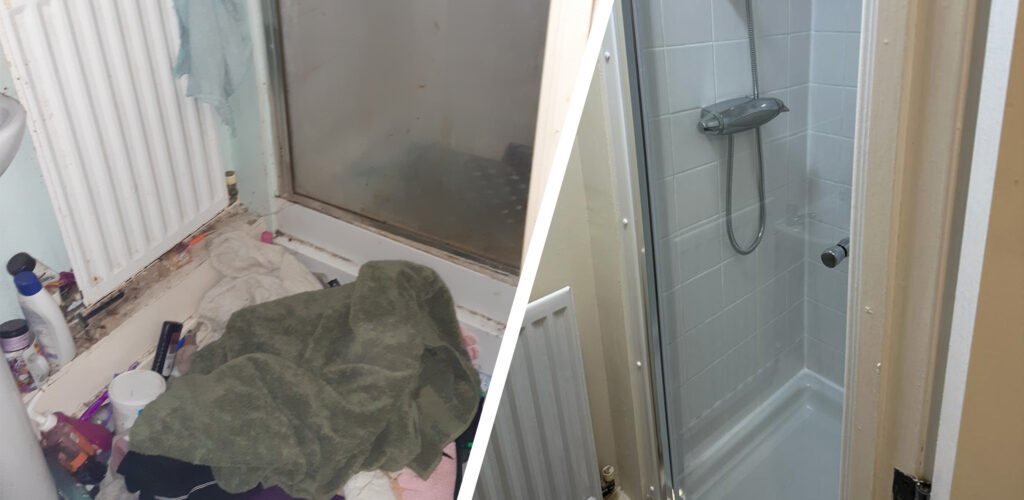
Hyde spends an average of £6,500 on each property in readiness for a new tenant. Gas safety and plumbing is checked, and utility companies notified. Rubbish must be cleared out, while gardens may also need tidying up.
Occasionally, more extensive repairs or redecoration is required. It isn’t unusual for the voids team to spend 10 days inside a home prior to it being relet. “The time we work on the void depends on the state a property is left in,” says Edokpa.
“In 2022, it took an average of 55 days between a tenant moving out of a [Hyde] home and new tenants moving in. By October 2023, the turnaround time had been halved to just 27 days”
How successful has the new policy been?
Hyde has approximately 31,000 general needs tenants and 14,000 shared owners.
In 2022, it took an average of 55 days between a tenant moving out of a home and a new tenant moving in. By October 2023, the turnaround time had been halved to just 27 days.
Is it just a question of getting homes ready sooner?
No. Empty homes represent poor use of a scarce resource, and are a wasted asset for social landlords.
Hyde therefore strives to ensure properties are suitable for new occupants, so that a tenancy is likely to be sustainable. In the long run, this should reduce voids through tenants remaining in the property longer once it’s relet.
According to Mark Batchelor, Hyde is “bringing the customer and the property closer together”. The key isn’t just getting a home ready to relet, but communicating with councils effectively so that Hyde matches properties with appropriate tenants. “They should not move into a property that is too small or does not meet mobility needs.”
With waiting lists growing, there’s a danger that some people will grab the first home offered to them, regardless of suitability. This makes it even more important to carry out checks beforehand, adds Batchelor.
“We don’t want anybody to live where they don’t want to”
Michelle, Empty Homes and Lettings Advisor, Hyde Group
Prior to moving in, anybody under 25 is automatically referred to Hyde’s tenancy sustainment team, which offers advice on benefits and other types of support.
Would-be tenants deemed ‘vulnerable’, including those with physical disabilities and mental health needs, receive additional guidance, while those in receipt of universal credit may be directed towards training opportunities. “We make sure the customer is in the right home and can sustain their tenancy,” says Edokpa.
Support continues on the day a tenant moves in, and over the coming weeks. During the past five years, Hyde has set up a team of 11 empty homes and lettings (EHL) advisors in different regions who welcome tenants, ensure they are aware of their responsibilities, and ultimately hand them their keys.
What specifically does an ELH advisor do?
Michelle, an EHL advisor in Kent, has worked for Hyde for 20 years. Her role includes interviewing applicants to assess their suitability, and checking they can afford to rent the property.
“Conversations with prospective tenants are extremely important,” she says. “Some applications can be straightforward, while others are more complex. An applicant could be a domestic abuse survivor or have challenges with mental health issues.”
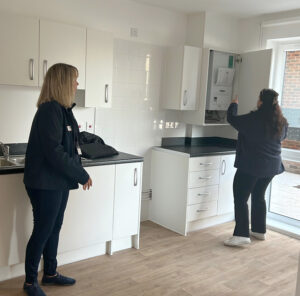
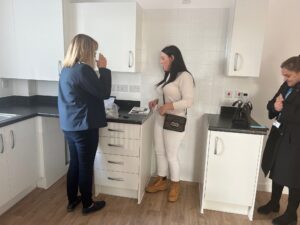
Initial interviews take place over the phone. Generally, an advisor meets an applicant for the first time when they show them around the property, inform them how to take meter readings, and discuss issues such as fire safety and heating and ventilation.
By building up a one-to-one relationship, Michelle and other EHL advisors hope that new tenants not only start to feel at home faster but are committed to their tenancy. “We don’t want anybody to live where they don’t want to,” she adds.
What does Hyde’s policy on voids and new tenants demonstrate?
With housing in short supply, it’s more important than ever that houses and flats don’t sit empty for long periods and, when available, are used to create sustainable tenancies.
By building more homes and making existing ones available for reletting faster, Hyde wants to respond to people’s circumstances. This means finding out as much as possible about their needs beforehand, and then welcoming them to their new home.
The work of EHL advisors is critical, explains Edokpa, not just to make people feel comfortable about their decision they are taking, but because advisors provide prospective tenants with their first impression of Hyde as a landlord.
“We want to make sure they are happy with where they’re about to live and see it as a place they can call home,” she adds.











One Response
Progress Housing has just set up a Tenancy Sustainability Team to help new tenants to settle into their homes and ensure that affordability has been considered. We assist in income maximisation, acquiring furniture, setting up bills for Council Tax and utilities and much more, dependant on the needs of the individual. We can support the new tenant for up to 3 months and if further support is still required we will refer them to our Critical support team.
The aim of this is to reduce the number of tenancies ending in the first 12 months by creating tenancy and community sustainability.
If anyone operates tenancy sustainability I would love to hear from you. [email protected]