

 Densification has become an important policy objective in many countries to combat urban sprawl, writes Josje Bouwmeester from the University of Bern, Switzerland.
The division of homes into multiple apartments or houses in multiple occupation, known as housing subdivisions, contributes to the densification of urban areas. There’s been a high demand for such subdivided flats in the Netherlands, where housing prices are soaring and household sizes are shrinking. Individual, small-scale investor landlords, attracted by low-interest rates, tax incentives, and sometimes pension insecurity, have capitalised on this trend. However, concerns raised by residents have prompted local authorities to regulate these subdivisions more strictly. This study investigates how local planning authorities implement and enforce new regulations and how investors respond to these stricter rules.
Drivers of subdivisions
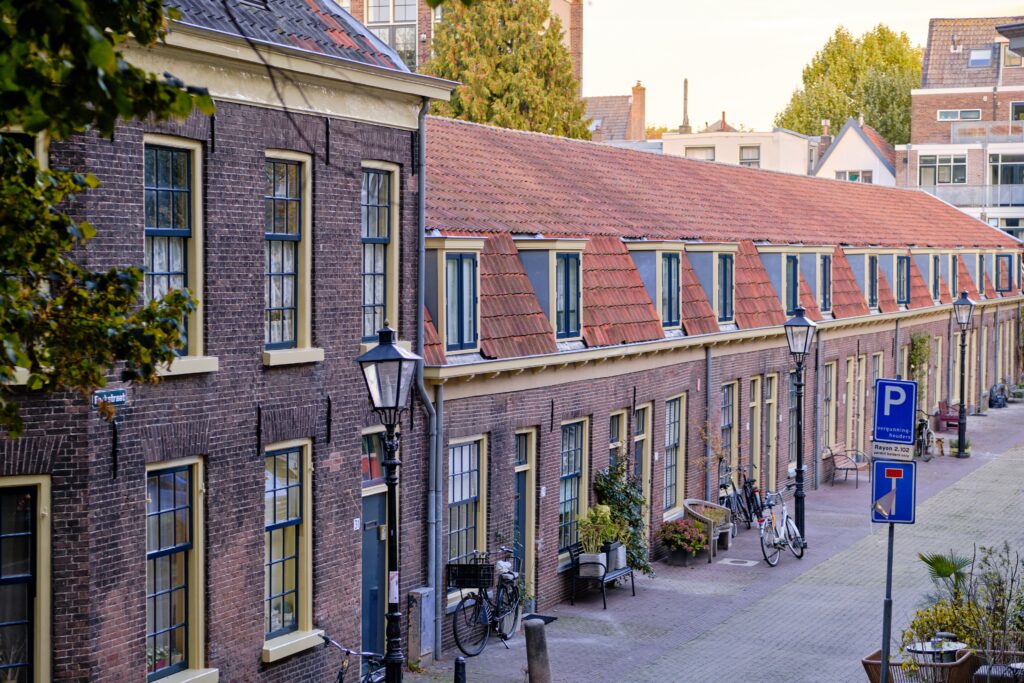
The research article focuses on the neighbourhood of Zuilen, situated in the city of Utrecht. The community is characterised by typical working-class housing, constructed in the 1910s through 1935s to accommodate workers of two factories located in the area. It’s become a popular location for investors to purchase family houses due to the relatively affordable housing stock. These investors have been subdividing the houses into multiple rental apartments or converting them into shared flats, where inhabitants usually share a bathroom, kitchen and living room.
As the city of Utrecht has become more popular amongst students and young professionals, there’s been a rising demand for this type of housing. In the Netherlands, investors must obtain permission from the municipal planning authority before subdividing their property. Initially, due to the shortage of student housing and apartments for young professionals, Utrecht approved most housing subdivision requests, allowing investors to deviate from the number of housing units prescribed by the land use plan.
New regulations in the face of citizen opposition
However, as the number of subdivisions increased, residents began to voice concerns about the changing character of their neighbourhood. The growing population density pressured parking facilities, waste management and other infrastructure. The temporary stay of many newcomers in subdivided units negatively impacted social cohesion, and lifestyle conflicts with the surrounding neighbourhood led to a surge in noise complaints. The competition from investors for affordable owner-occupied housing also made it difficult for young families to purchase their first homes. Consequently, residents in Zuilen and beyond organised neighbourhood action groups and pushed for tighter regulations.
As a result of increased opposition against subdivisions, the municipality established stricter criteria for granting subdivision permits. However, due to the housing shortage, it didn’t want to ban them altogether. Instead, the city aimed to balance three different objectives: 1) Ensure the quality of life of residents; 2) protect the limited affordable, owner-occupied housing stock; and 3) provide housing for students and young professionals. Each request is now evaluated based on these three objectives to balance them out. A ‘liveability test’ is conducted to assess the conditions in the neighbourhood, including available parking space and the number of previous subdivisions. Furthermore, new regulations also include a minimal surface area and stricter soundproofing requirements. The decision to approve or reject permit requests ultimately lies with the local planning authority. In the case of the new subdivision regulations, this allows municipalities to negotiate with investors to achieve a better outcome. For example, the local planning authority can grant a permit request when the investor reduces the number of new rooms or apartments created.
Investor responses and non-enforcement
However, this approach to planning also poses some challenges. As the city implemented the new conditions, permit requests dropped significantly. The study found that instead, investors moved to other less-regulated opportunities, such as short-term rentals. Perhaps unexpectedly, in a highly regulated context like the Netherlands, some investors also decided to subdivide illegally. Interestingly, the local planning authorities are aware of the many illegal subdivisions. As stated by one interviewee working in enforcement: “We once selected a neighbourhood and just checked house by house. When we do that, we come across so many illegal houses in multiple occupation; we cannot process that in terms of capacity”. As stated in the quote above, this is done due to a lack of enforcement capacity. The results indicate an inconsistency between the municipal parliament’s (legislative) intention to implement stricter rules and the financial and personnel resources available to the local planning authority (administrative).
Other times the subdivision policy isn’t enforced because the planning authority considers other policy problems, such as the shortage of student rooms, more pressing. As argued by enforcement agents, the alternative is to put the occupants out on the streets, which they prefer to avoid. The planning authority, therefore, only passively enforces when it receives a complaint from a neighbour. This study demonstrates that local authorities expect, know and sometimes even legitimise non-compliance. This approach, of course, isn’t a permanent solution to the housing shortage, especially considering tenants in illegal subdivisions are often in a precarious position as they cannot approach the authorities when other regulations (for instance, fire safety) are violated, and in some cases are threatened by their landlord to be kicked out if they make a complaint.
Creating coherence through flexibility
The case shows that the planning authority strategically decides to enforce (or not), allowing them to balance opposing policy objectives. Through this, planning authorities create more flexibility to respond to complex public problems. While the Netherlands is a plan-led system on paper, municipalities often look for planning instruments that offer more discretionary power. It’s argued that the ability to make case-by-case decisions gives the city more steering capacity, as it provides the opportunity to negotiate with investors and other landowners to create coherence in the face of many conflicting interests. Creating this coherence is especially important in the context of densification projects, where landowners hold veto rights to block or delay projects due to the property rights they hold. However, when cost-benefit considerations become the rule at the level of developers, investors, landowners and planners, abstract concerns about the general interest and corresponding necessary compliance with the law are pushed into the background.
This study is part of the ‘Governing Densification’ project, which aims to understand how densification objectives can be effectively achieved while retaining urban quality for all. www.goverdense.org. The author ([email protected]) can be contacted for further questions.
Josje Bouwmeester, Jean-David Gerber, Thomas Hartmann and Deniz Ay (2023) ‘Non-compliance and non-enforcement: An unexpected outcome of flexible soft densification policy in the Netherlands’, Land Use Policy. Available at: https://tinyurl.com/yrfts573