

 Dr Halima Sacranie, Director of Housing Research, Centre for the New Midlands and Nicola Bacon, Founding Director, Social Life
England has had a Decent Homes Standard for 25 years which has served as clear, enforceable minimum for the quality of the home. While there are many aspirational design guides and frameworks, there’s no equivalent quality standard for the neighbourhood: the shared unit of place that connects homes and communities and where everyday life happens. There’s no clear standard setting out what level of safety, social infrastructure or opportunity a neighbourhood should offer; and accountability for neighbourhood quality is fragmented between agencies, with no single agency responsible for taking action when services and infrastructure fall short and place-based inequalities exacerbate disadvantage and stifle opportunity.
The Decent Neighbourhood Standard (DNS) is being developed to fill that gap. This collaborative programme between the Centre for the New Midlands, Social Life and Witton Lodge Community Association, aims to create a practical, shared framework for measuring neighbourhood quality and building collective accountability at the neighbourhood scale.
We want the DNS to become a useful and practical tool for policymakers, housing providers, local authorities, community anchors, local institutions and wider stakeholders. It provides a shared, benchmarked evidence base for prioritising investment, making the case for resource allocation, and holding partners to account. As national and local policy shifts towards good growth in place, devolution, the implementation of Pride in Place and the reformed Decent Homes Standard, the DNS has a strong role to play in the way that neighbourhoods are governed and funded.
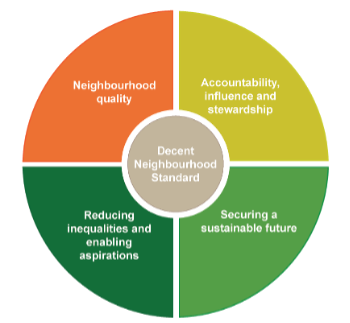
The DNS is built on four dimensions: neighbourhood quality; reducing inequalities and enabling aspirations; accountability, influence and stewardship; and securing a sustainable future. These universal dimensions draw on underlying principles of the Decent Homes Standard around being fit for purpose and free from hazards, layered with seminal urban design frameworks and a conceptualisation of what ‘decency’ means in place. We’ve been applying and developing these dimensions through neighbourhood demonstrators in north and south Birmingham, drawing on participatory methodologies, extensive engagement with stakeholders, community insights and neighbourhood diagnostics. The DNS indicator dashboard for each particular neighbourhood needs to be grounded in local priorities and hyper-local or granular data.
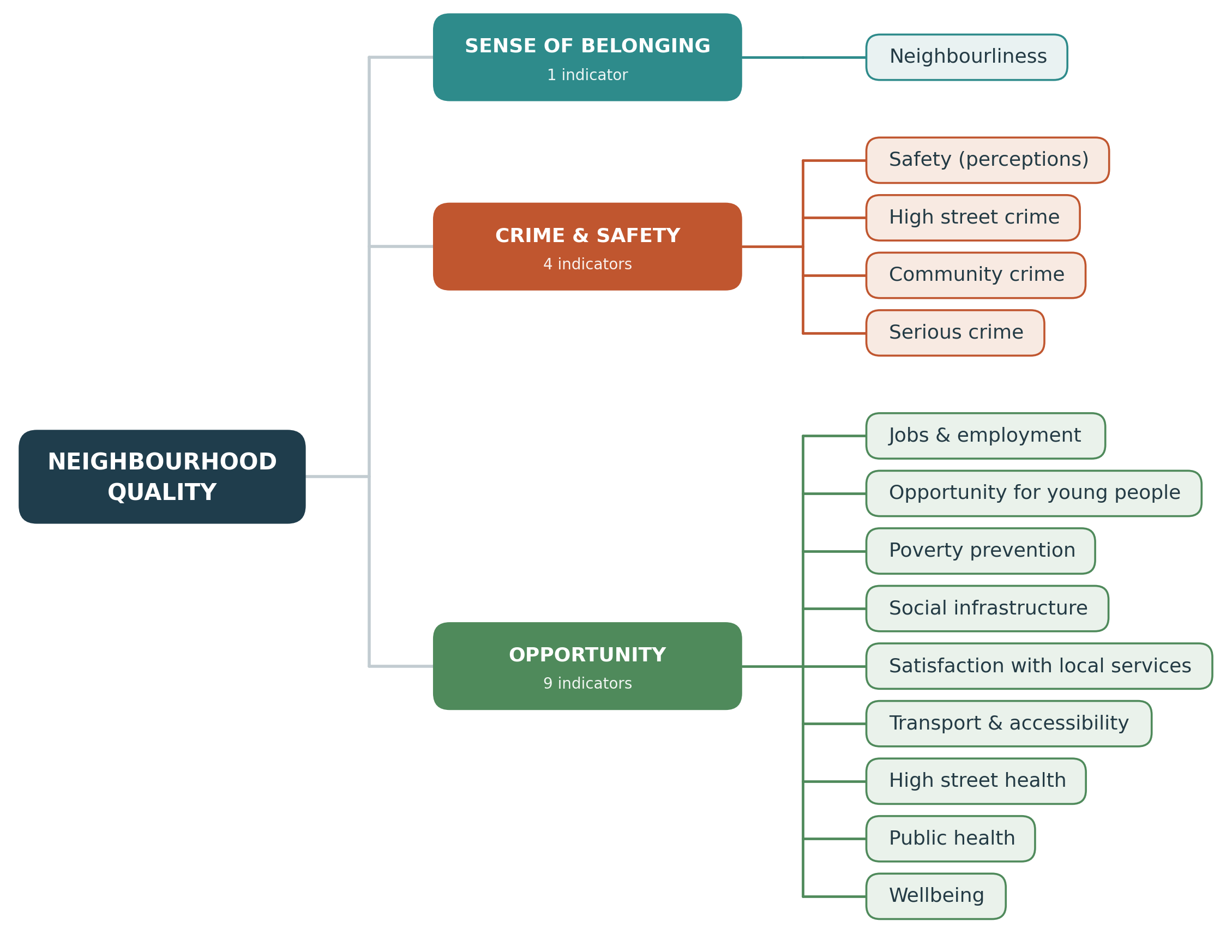
Our latest report ‘North Birmingham Decent Neighbourhood Standard: Erdington High Street’, published in June 2026, focuses on the application of the first of those four universal dimensions to the Erdington High Street in North Birmingham. Working with Witton Lodge Community Association (a community-led housing organisation) we developed a neighbourhood quality dashboard from existing public data, benchmarked Erdington against Birmingham and England, informed by a short survey of residents and local organisations.
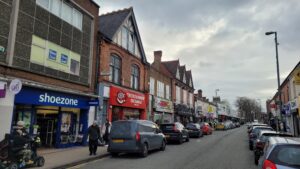
The DNS dashboard includes a mix of ‘hard’ data (for example, from the census or IMD) and ‘perceptual’ data, describing how residents feel about their neighbourhood. The evidence revealed a neighbourhood of competing strengths and challenges. Residents describe a strong sense of belonging and community spirit, and value their high street’s diversity and transport links. However, the same street is also widely described as dirty, run-down and intimidating. The starkest finding is the safety-perception deficit: only 15% of residents surveyed felt safe walking alone after dark, against a modelled benchmark of around 71% for comparable areas. Recorded crime counts measure incidents reported rather than the pervasive fear that can erode the quality of daily life.
The DNS dashboard revealed significant infrastructure gaps on the Erdington High Street. GP provision is around roughly half the Birmingham average and dental access is negligible; both reinforce health inequalities. The data also showed strengths in social infrastructure strengths like the access to libraries, which is well above city and national benchmarks. However, Erdington library’s temporary closure for repairs was flagged as an issue.
The report unpacks what we call “data decency”. Some indicators, like violent crime, have no acceptable level: the target must be a year-on-year reduction. Some decency benchmarks are statutory (like GP and dental access) where failure is a breach of legal duties, rather than just an aspiration gap. Other indicators are guided by national good practice, such as high-street vacancies, or, like perceptions of safety and sense of belonging, are best judged against relative benchmarks; for example, reaching the average of comparable areas as a minimum and the national average as an ambition.
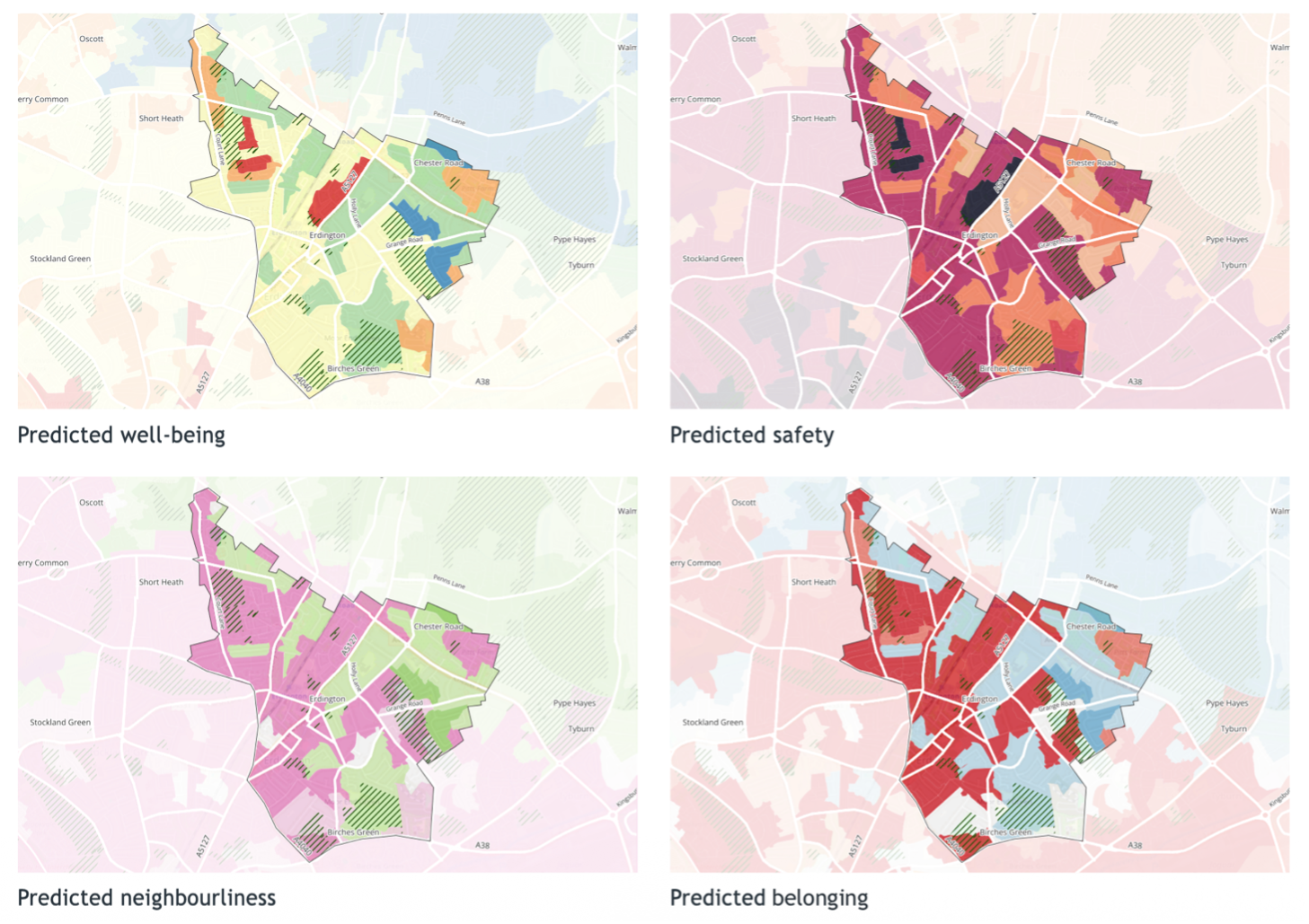
Mapping indicators this way translates the concept of decency into something local, nuanced and measurable. Crucially it allows us to start understanding both the quality gaps prevalent in a neighbourhood and who’s accountable for addressing these deficits.
This report captures the first phase of the DNS, the data baseline. The next phases will co-produce “decency thresholds” directly with local communities and residents through deeper community insights and neighbourhood diagnostics. The DNS needs to enact decency through its methodology, reflecting lived experience, strengthening local accountability and stewardship, and securing sustainable futures for neighbourhoods.
If your organisation would like to find out more about the Decent Neighbourhood Standard, or to explore running a demonstrator in your own area, it’d be great to hear from you – please do get in touch. The home has had a quality standard for a quarter of a century, and we think it’s time for the neighbourhood to have one, too.